Cited Early, Cited Again: What "Conversational Capture" Means for Multi-Turn GEO
Cited Early, Cited Again: What "Conversational Capture" Means for Multi-Turn GEO
A buyer asks an AI assistant for the best CRM tools. The answer names five products and cites a handful of sources. The buyer follows up: which of these work for a 10-person team? Then: what does the cheapest plan leave out? Then: is that integration claim accurate? By the fifth turn, the shortlist has one name on it.
Most AI visibility reports score only the first of those answers. A paper submitted to arXiv on September 30, 2026 argues that the single answer is the wrong unit of analysis. Its authors, from UniConvo, the University of Tsukuba, Hiroshima University, and Japan's National Institute of Informatics, introduce conversational capture: a source cited early in a conversation becomes substantially more likely to be cited again [1]. The paper will appear in the proceedings of HAI '26, the International Conference on Human-Agent Interaction, held Sep 16–19, 2026 in Osaka [1].
The result is theoretical. Its numbers come from a mathematical model, and the authors did not test ChatGPT, Gemini, or Google AI Mode. Industry studies of commercial assistants published this summer point in a compatible direction, though. Together they describe a measurement gap many brand teams already sense: appearing in one answer and staying in the conversation are different outcomes.
---
The Short Answer
Conversational capture is path dependence in multi-turn AI conversations. According to the paper, it works through two channels [1]:
- Machine side: the AI system conditions retrieval on the dialogue history, so a source that shaped earlier answers keeps influencing later ones.
- Human side: each answer changes what the user believes, so the next question drifts toward what the user has already seen.
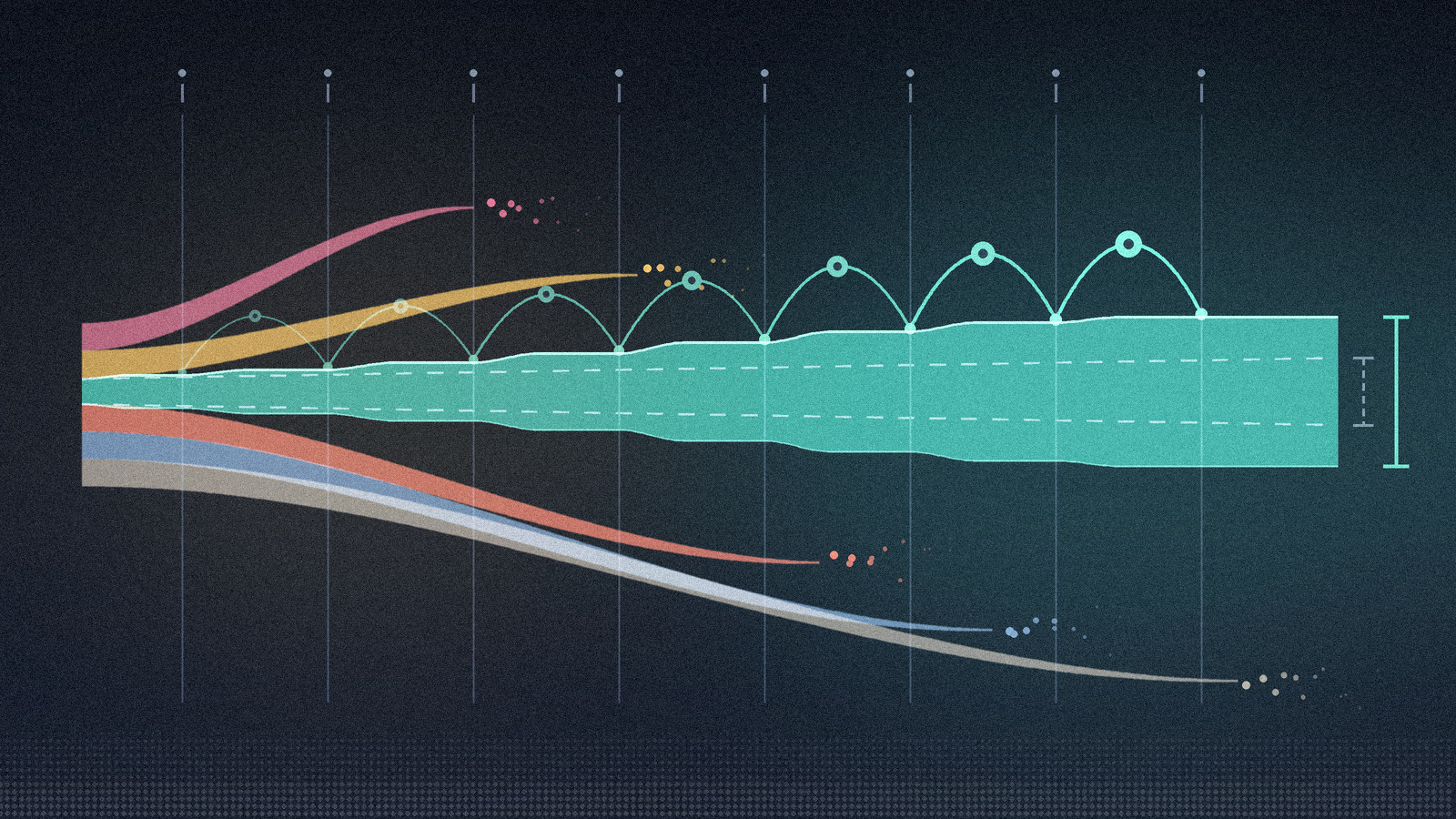
In the authors' model, early turns decide much of the outcome, and an optimized source's cumulative gain grows faster than linearly with conversation length while capture develops. Single-turn evaluation cannot see this feedback at all. In the paper's ten-turn illustration, the realized gain is 2.23 times what a one-turn measurement would predict, and single-turn testing ranks optimization methods in a different order than trajectory testing does [1].
For brands, the practical consequence is a change in what to measure. Track conversations as trajectories: where the brand enters, whether it survives each follow-up, which follow-up removes it, and whether it is still there at the decision turn. That requires scenario-based conversation simulation with scripted follow-ups, adaptive follow-ups, and stateless controls.
Three boundaries apply:
- The paper's values are model-derived. Empirical validation on conversational datasets is the authors' stated next step.
- No source cited here measures how strongly capture operates inside a specific commercial assistant.
- External simulation approximates real conversations. It cannot reproduce any individual user's chat history or memory.
---
What Is Conversational Capture?
Existing GEO evaluation, the paper notes, fixes a query, runs the engine, and scores how prominent a target source is in that one answer. The approach treats each query as supplied from outside the system and each turn as independent [1]. In a real conversation, neither assumption holds. The user reads the answer and adjusts the next question, and the engine retrieves for that question with the earlier turns in context. An early advantage can feed both loops.
The authors model the process with reinforcement-process theory, the Pólya-urn family of models also used to describe preferential attachment and economic lock-in. Each citation adds weight to the source that received it, which raises the chance of the next citation. Two results follow from the model [1]:
- The process is non-ergodic. Early turns decide the outcome, so the leverage of optimization concentrates in the first answers.
- Cumulative gain is superlinear. While capture develops, an optimized source's total gain grows faster than the number of turns.
One detail matters for brands. The paper states that this persistence can be independent of a source's current relevance. A source can keep being cited because it was cited before. The authors link this to trust calibration: repeated exposure can make a source feel more reliable while reducing the user's exposure to alternatives that could correct that impression [1].
The paper's metrics in plain language
| Metric | What it measures | How to read it |
|---|---|---|
| Cumulative conversational visibility | A source's visibility summed across the turns of a conversation | The trajectory-level outcome |
| Direct term | The gain from optimization that appears turn by turn, as if turns were independent | The part single-turn evaluation can see |
| Feedback term | The extra gain produced by the loop, split into machine-side and human-side channels | Zero by construction under single-turn evaluation |
| Capture coefficient | Probability of being cited next turn if cited this turn, minus the probability if not cited this turn | Above zero means a citation raises the chance of the next one |
| Compounding ratio | Realized trajectory gain divided by first-turn gain multiplied by the number of turns | 1 means independent turns; above 1 means compounding |
| Misranking diagnostic | Rank agreement (Kendall's tau) between methods ranked by first-turn gain and by trajectory gain | Low values mean single-turn tests can pick the wrong method |
What the model's illustration shows
In a ten-turn illustration, the optimized source's total gain is 2.68 units of cumulative visibility. The direct term accounts for 1.20. The remaining 1.48 comes from feedback: 0.85 through the machine-side channel and 0.63 through the human-side channel. The compounding ratio is 2.23. When five optimization methods were ranked both ways, the rankings agreed only weakly (Kendall's tau of 0.4), and the method that won on a single turn placed third on the full trajectory [1].
These figures illustrate how the model behaves. They are not measurements of any commercial AI system.
What the paper does not show
The authors list the limits themselves [1]:
- The values are model-derived. The planned empirical study would inject optimized and control passages into conversational question-answering datasets, including TopiOCQA, QReCC, and ORConvQA, and run an open-source retrieval-augmented generation pipeline turn by turn.
- Open-source pipelines differ from closed commercial engines.
- Estimating the human-side channel requires a calibrated user simulator, and results should report how sensitive they are to it.
- The study measures no real human trust or perception.
- Competition among several optimized sources is outside the model.
The paper also proposes defenses for answer engines: re-grounding retrieval at each turn, enforcing source diversity within a turn, and explaining why a source keeps being cited [1]. If platforms adopt them, capture weakens. That is a strong reason to use capture as a measurement concept and to avoid building tactics around it.
---
How Do People Actually Talk to AI Assistants?
Multi-turn conversation is a normal way of using AI assistants, and platforms are designing for it.
- Users ask for guidance and information. A study of ChatGPT consumer usage through July 2025 found that "Practical Guidance," "Seeking Information," and "Writing" together account for nearly 80% of conversations, and that much of the product's value comes from decision support [2].
- Conversations run past a single exchange. WildChat, a research dataset collected from users who opted in, contains 1 million ChatGPT conversations made up of more than 2.5 million interaction turns [3].
- Platforms invite follow-ups and keep context. In January 2026, Google made it possible to ask a follow-up question directly from an AI Overview and continue in AI Mode. Google said its testing found that people prefer an experience that flows into a conversation, and that follow-ups which keep the AI Overview's context make Search more helpful [4].
- Shopping tools ask questions back. OpenAI describes shopping research in ChatGPT as a conversation that asks what the shopper cares about, then returns options for the shopper to refine [5].
Follow-ups also take recognizable forms. The paper's proposed user simulator draws on a taxonomy of follow-up moves mined from interaction logs: deepening, rephrasing, challenging, and pivoting [1]. Industry tests add moves that matter commercially, such as adding a buyer constraint and moving through comparison, validation, and selection [6][7].
| Follow-up move | Example after "best CRM tools?" | What it tests for a brand | Content that holds up |
|---|---|---|---|
| Deepen | "How does pipeline reporting work in these?" | Depth of documented detail | Feature documentation with specifics |
| Rephrase | "Any simpler options?" | Whether the association survives new wording | Consistent product and category naming |
| Add a constraint | "Which work for a 10-person team?" | Whether the AI knows who the product is for | Explicit segment fit and pricing by team size |
| Compare | "Option A or Option B for our workflow?" | Differentiation on the user's criteria | Comparison pages with verifiable criteria |
| Challenge | "Is that integration claim accurate?" | Whether claims can be verified | Sourced facts, changelogs, third-party corroboration |
| Pivot | "What about tools that include email marketing?" | Association with adjacent needs | Use-case and integration pages |
| Validate or select | "Is it worth the price? How do I get started?" | Decision-stage evidence | Pricing, onboarding steps, case evidence |
The deepen, rephrase, challenge, and pivot moves come from the paper's taxonomy. Constraint follow-ups come from Clovion's test design, and the comparison, validation, and selection moves follow the buyer-journey stages in the Semrush study.
---
What Do Studies of Commercial Assistants Show?
Two industry studies published this summer tested multi-turn behavior in commercial assistants. Neither tests the paper's model directly. Both show that a first-answer snapshot leaves out most of what happens next.
Follow-ups reshuffle the shortlist. Oslo-based research firm Clovion AI ran 69,120 multi-turn conversations across Claude, ChatGPT, and Gemini in 36 B2B software and fintech categories. Each conversation opened with a question such as "best CRM tools?" and continued with one realistic follow-up. Re-asking the same question kept 90% of the recommended list. Adding one ordinary buyer detail, "for a small team," kept only 28%. The study's headline figure is that 62% of the brands in the first answer were gone by the second. Testing "for a large enterprise" produced similar churn, around 72%, compared with roughly 10% when the question was simply repeated [6]. Search Engine Journal's columnist read the result as the list responding to whether the model has decided who a brand is for. The same column reported that a draft of the report contained layout errors, which Clovion corrected; the figures above are those the column reported [6].
Persistence depends on the mode. Semrush and Growth Memo's Kevin Indig ran 100 prompts covering 20 buyer journeys through GPT-5.2 in minimal and high reasoning modes. Each journey had five stages: problem, exploration, comparison, validation, and selection. They checked whether a brand cited at the problem stage was still cited at the selection stage of the same journey. Under minimal reasoning, no journey showed that full-funnel persistence. Under high reasoning, four of the 20 did. High reasoning also cited the same domain more than once within a single answer in 51 of 100 responses, against 26 of 100 under minimal reasoning [7]. Semrush notes that ChatGPT routes complex prompts, such as comparisons and evaluations, into high reasoning automatically [7].
The two results can look contradictory. One shows early citations persisting; the other shows most early recommendations disappearing. They describe two sides of the same property. Each turn filters the candidate set, and whatever survives a filter tends to keep appearing. A brand that fits the constraints the buyer adds can gain momentum, while a brand with unclear fit can drop out at the first specific question. A first-answer snapshot captures neither movement.
---
Why Can Single-Turn Tracking Mislead?
| Question a brand team asks | What a single-turn snapshot shows | What trajectory monitoring adds |
|---|---|---|
| Are we visible? | Presence in one answer to one prompt | Presence across every turn of a realistic conversation |
| Are we gaining or losing? | Change in first-answer mentions | Entry turn, survival, and exit points over time |
| Why do we lose? | Absence, with no context | The follow-up move after which the brand drops |
| Which content works? | First-answer lift | Cumulative effect, including turns shaped by earlier answers |
| Are we recommended at decision time? | Usually untested | The outcome at the validation and selection turns |
Four risks follow from the evidence:
- Underestimating early wins. If capture develops, a one-turn measurement misses the feedback entirely. In the paper's model, the feedback term is identically zero under single-turn evaluation [1].
- Missing the exit. In Clovion's results, most brand losses happen at the first specific follow-up, a turn that single-turn tracking never asks [6].
- Choosing the wrong tactic. In the model, single-turn and trajectory rankings of optimization methods agreed only weakly [1].
- Confusing persistence with relevance. A source can keep being cited because it was cited before [1]. A competitor's persistence in your category may reflect early placement more than fit.
Per-turn measurement stays useful. The paper's trajectory metrics are computed from the same per-turn visibility values that existing pipelines already produce [1]. What changes is how the turns are connected and read.
---
How Do You Measure Multi-Turn AI Visibility? A Seven-Step Workflow
Step 1: Build scenarios from real buyer journeys
Start with the conversations your buyers actually have, drawn from sales calls, support tickets, site search, and on-site chat. Define each scenario by persona (role, company size, market, and language), task, and the constraints that usually come up. A scenario should read like a brief: "Operations lead at a 40-person logistics company in Germany, comparing route-planning software, budget-sensitive, needs an SAP integration."
Step 2: Script the opening question and the follow-up path
Write the opening question the persona would ask, then a sequence of follow-ups using the moves in the table above: add a constraint, compare, challenge, validate, and select. As a starting point, four to six turns cover most buying journeys; complex B2B decisions may need more. Keep the wording natural, and leave your brand name out of the opening question, since branded prompts inflate visibility.
Step 3: Run three versions of each scenario
| Run type | How it works | What it isolates |
|---|---|---|
| Scripted | The same follow-ups are asked whatever the AI answered | The effect of conversation history, with the user's questions held fixed |
| Adaptive | Each follow-up is generated from the previous answer, in the persona's voice | An approximation of how real users drift toward what they have seen |
| Stateless control | Each later-turn question is asked in a fresh session with no history | The answer the engine gives without the conversation |
This design mirrors the paper's decomposition. Comparing scripted runs with stateless controls on identical questions estimates the machine-side history effect, which, the paper notes, can be measured without any user model. Comparing adaptive runs with scripted runs approximates the human-side drift, and its accuracy depends on how closely the simulated follow-ups resemble real ones [1].
Step 4: Record every turn
For each turn, record whether the brand is mentioned, whether it is recommended and in what position, which URLs and domains are cited, which competitors appear, what claims are made about the brand and whether they are accurate, and whether the next question was directed at the brand.
Step 5: Compute trajectory metrics
| Metric | Definition | Diagnostic use |
|---|---|---|
| Entry turn | First turn in which the brand is mentioned or cited | Shows whether the brand enters early or only after a specific question |
| First-answer survival | Share of runs in which a brand present in turn one is still present at the final turn | Measures durability, as in Clovion's retention test |
| Capture rate | Probability of being cited next turn if cited this turn, minus the probability if not | The paper's capture coefficient applied to observed runs |
| Cumulative visibility | Visibility summed across all turns | Compares brands and content over the whole conversation |
| Exit turn and trigger | The turn and follow-up move after which the brand disappears | Points to the missing evidence |
| Decision-turn outcome | Whether the brand is recommended at the validation or selection turn | Connects visibility to the purchase moment |
| History effect | Difference between in-conversation and stateless answers to the same question | Shows how much earlier turns shape later ones |
| Rank agreement | Agreement between rankings by first-answer visibility and by cumulative visibility | Flags when single-turn reports would mislead |
Step 6: Repeat runs and record conditions
AI answers vary from run to run. Repeat each scenario several times per platform, use fresh sessions, and record the platform, mode, model, language, location, and date. Give reasoning mode its own split: Semrush found that only 25.6% of cited domains overlapped between minimal and high reasoning on the same prompts [7]. Treat model releases as breakpoints and start a new baseline when one occurs.
Step 7: Diagnose by exit point
- The brand never enters: strengthen problem- and exploration-stage content that names your category, method, or product explicitly.
- The brand enters, then exits at a constraint turn: state who the product is for, by team size, industry, region, and budget, on pages AI systems can cite.
- The brand exits at a challenge turn: make claims verifiable with documentation, changelogs, and third-party corroboration.
- The brand persists only through third-party sources: check those sources for accuracy and publish first-party documentation the AI can cite directly.
- A competitor is captured early: earlier citations can't be undone, so focus on being the best-supported answer at the turns where constraints narrow the field.
---
Where Innflows Fits
Real buyer conversations can't be observed from outside an AI platform. They can be approximated with structured simulation and measured the same way over time.
Innflows runs simulated user questions across major AI platforms, including ChatGPT, Gemini, and Google AI Mode, and across languages, recording brand mentions, recommendation roles, and cited sources over time. For multi-turn monitoring, Innflows approaches the problem as scenario-based conversation simulation:
- Scenario library: personas and buying journeys built from the brand's own customer questions, organized by market and language.
- Turn-by-turn execution: each scenario runs as a connected conversation, with scripted follow-ups for comparability, persona-driven adaptive follow-ups for realism, and stateless controls as a baseline.
- Per-turn records: mentions, recommendation position, cited URLs, competitor sets, and claim accuracy at every turn.
- Trajectory reporting: entry turn, survival, exit triggers, and decision-turn outcomes, compared across runs, platforms, and time.
- Action mapping: each exit point linked to the page or third-party source that needs work.
The boundaries are explicit. Innflows cannot read real users' chat histories, memories, or platform logs. Adaptive follow-ups approximate human behavior, and results depend on how scenarios and personas are designed. Findings describe the tested conditions, including platform, mode, language, account state, and date, and cannot predict what any individual will see. A capture rate observed from outside shows an association across runs; it does not prove which internal mechanism produced it. And no monitoring tool can guarantee citations or recommendations.
---
Six Common Misreadings
1. "The paper proves ChatGPT locks onto the first brand it cites."
The paper's numbers come from a model, and the authors have not yet tested commercial engines [1].
2. "Single-turn prompt tracking is now useless."
Per-turn visibility remains the building block. Trajectory metrics connect those turns into a fuller picture [1].
3. "If we appear in the first answer, we've won."
In Clovion's test, 62% of the brands in the first answer were gone after one follow-up [6].
4. "Capture means the cited source is the best one."
The paper states that persistence can be independent of a source's current relevance [1].
5. "Longer conversations always favor the early leader."
The superlinear result holds while capture develops, and platforms can weaken it through re-grounding and source diversity [1]. A follow-up that changes the constraints can also reset the field [6].
6. "Simulated conversations reproduce real users."
They approximate them. The paper itself calls for calibrating simulated follow-ups against observed behavior and reporting sensitivity to the simulator [1].
---
Frequently Asked Questions
What is conversational capture?
It is a pattern in multi-turn AI conversations in which a source cited early becomes more likely to be cited again, through history-conditioned retrieval and through the follow-up questions users ask [1].
Has conversational capture been measured in ChatGPT, Gemini, or Google AI Mode?
Not directly. The paper is theoretical, with model-derived values. Industry studies show related effects in commercial assistants, including brand persistence across buyer journeys under high reasoning in ChatGPT [7] and heavy shortlist churn after a single follow-up [6].
Should brands try to capture conversations?
The paper describes capture as a manipulation surface and proposes platform defenses against it [1]. The durable approach is to be the best-supported answer at each turn, especially at constraint and decision turns.
How many turns should a simulated conversation have?
The paper's illustration uses ten turns [1], and the Semrush study used five stages per journey [7]. Four to six turns are a practical starting point for most buying journeys, with more turns for complex B2B decisions.
How is multi-turn monitoring different from prompt tracking?
Prompt tracking scores answers to independent prompts. Multi-turn monitoring runs connected turns, records each one, and measures entry, survival, exit, and decision-turn outcomes.
Can external monitoring show what a specific customer saw?
No. External simulation has no access to private chat histories or memory. It describes the distribution of answers under controlled conditions.
How often should multi-turn scenarios be rerun?
Rerun them on a fixed cadence, after major content changes, and after model releases, since a new model can change citation behavior.
---
The Bottom Line
The paper's core claim is simple: in a conversation, each answer influences the next question, so visibility can compound or collapse across turns. Its numbers are theoretical, but data from commercial assistants already shows that first-answer visibility is a weak guide to where a brand ends up.
For GEO teams, the response is a change in measurement. Monitor conversations as trajectories built from real buyer scenarios, with scripted and adaptive follow-ups and stateless controls. Then fix the evidence gap at the turn where your brand drops out.
The question that matters is whether your brand is still in the answer when the buyer decides.
---
References
[2] - How People Use ChatGPT — NBER Working Paper w34255, September 2025
[3] - WildChat: 1M ChatGPT Interaction Logs in the Wild — arXiv:2405.01470, ICLR 2024
[4] - AI Mode in Google Search and AI Overviews Get Gemini Upgrades — Google, January 27, 2026