Connected Is Not Recommended: How Shopify Catalog and MCP Shape AI Shopping Visibility

Connected Is Not Recommended: How Shopify Catalog and MCP Shape AI Shopping Visibility
Quick answer: Shopify can make an eligible product available to AI shopping channels through Shopify Catalog, but availability does not guarantee that ChatGPT, Google AI Mode, Gemini, Microsoft Copilot, or another agent will display or recommend it. AI shopping visibility is a layered system: a product must first meet catalog requirements, reach the relevant channel, contain enough structured and descriptive data to be understood, match the shopper’s intent, and provide sufficient evidence for the channel to rank it as a useful answer. Shopify Catalog solves product-data distribution. It does not replace product-data quality, website crawlability, entity clarity, or recommendation evidence.
This distinction matters because Shopify’s agentic storefronts are changing how product discovery works. Eligible stores can make products available to supported AI channels through a structured catalog rather than relying only on conventional web crawling. Shopify also provides catalog interfaces and Model Context Protocol (MCP) capabilities that allow agents to search products, retrieve details, and support shopping workflows. Yet the final selection still belongs to the AI channel. A product can be connected, technically eligible, and machine-readable—and still lose the recommendation.
For merchants, the technical question is no longer simply, “Is my product online?” It is: Can an AI agent retrieve the product, understand its attributes, verify its claims, and determine that it fits this particular request better than the alternatives?
---
What Shopify Agentic Storefronts Actually Change
Shopify agentic storefronts allow shoppers to discover and, where supported, purchase products through AI environments such as ChatGPT, Google AI Mode and Gemini, and Microsoft Copilot. According to Shopify, agentic storefronts are active by default for eligible stores, and eligible product data can be made available to supported channels through Shopify Catalog. [1][2]
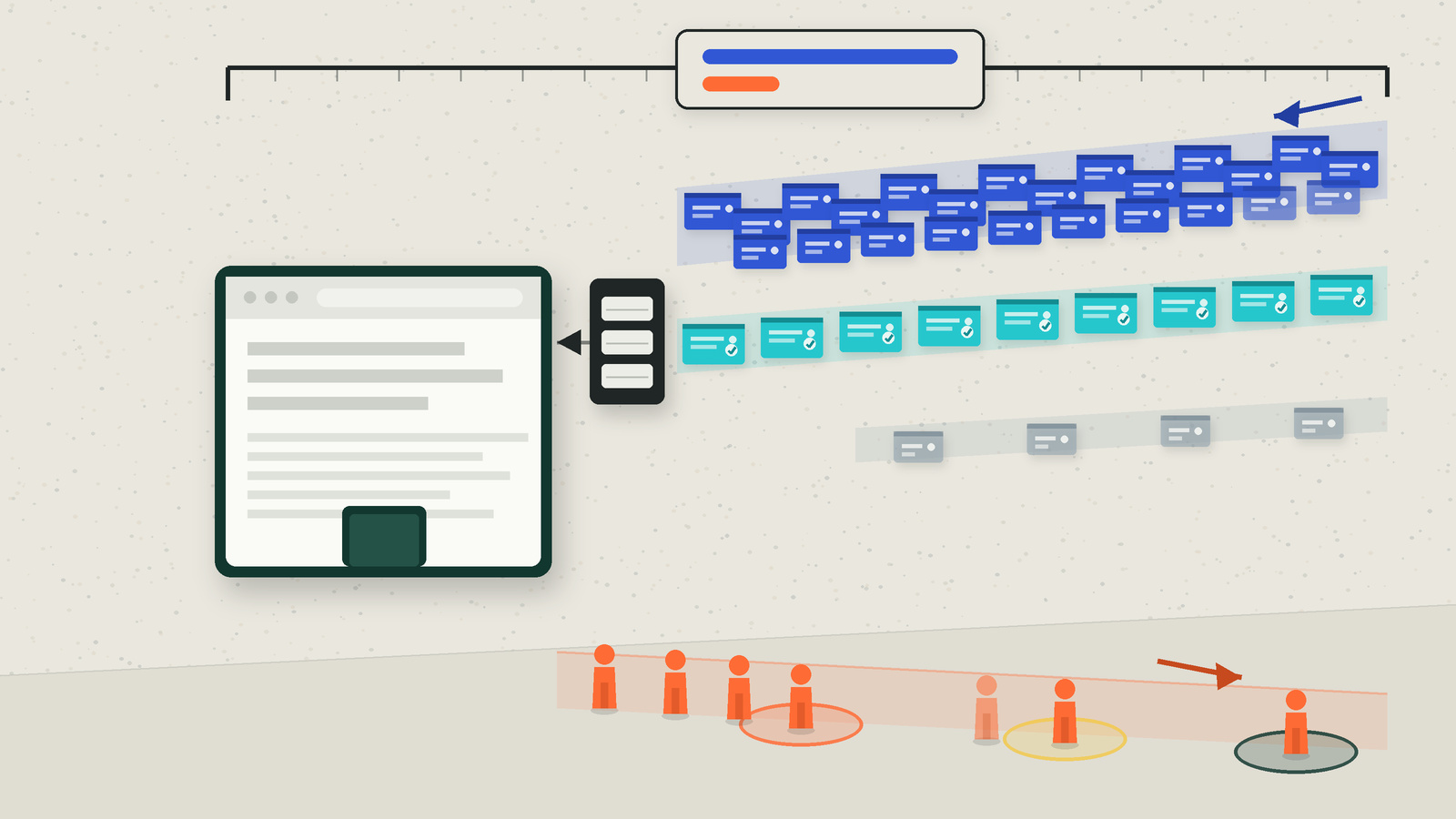
That changes the product-discovery architecture. In traditional ecommerce search, a merchant publishes a product page, a search engine crawls it, and a ranking system decides whether to show it. In agentic commerce, structured catalog data can travel directly from Shopify into an AI-compatible product-discovery layer. The agent may search that layer, retrieve matching products, compare attributes, and construct a recommendation without navigating the storefront like a human shopper.
However, “available through Shopify Catalog” has a precise meaning. It means the data can be accessed by supported AI channels when the store and product satisfy Shopify’s requirements. Shopify explicitly notes that structured availability can help customers discover products where the channel chooses to display them. The channel still controls retrieval, filtering, ranking, presentation, and recommendation. [2]
That gives merchants a new but important distinction:
- Connection means the product is technically available to a channel.
- Discovery means the channel retrieves it for a relevant request.
- Understanding means the channel correctly interprets what it is, who it is for, and how it differs.
- Recommendation means the channel decides it is strong enough to include in the answer.
These are separate stages. Passing one does not guarantee the next.
The Four-Layer Model of AI Product Visibility
A useful way to diagnose agentic-commerce visibility is to treat it as a four-layer pipeline: eligibility, availability, understanding, and recommendation.
| Layer | Question | Typical failure | Primary fix |
|---|---|---|---|
| Eligibility | Can this store and product enter Shopify Catalog? | Password-protected store, missing image, zero price, unsupported setup | Meet Shopify’s catalog requirements |
| Availability | Can the intended AI channel access the product? | Channel, region, product-sync, or direct-checkout requirements are not met | Verify channel-specific configuration and product synchronization |
| Understanding | Can the agent interpret the product accurately? | Vague title, missing attributes, weak variant data, conflicting facts | Improve product data, page content, schema, and entity consistency |
| Recommendation | Does the product fit the prompt and appear trustworthy? | Weak intent match, no differentiators, insufficient evidence, poor competitive context | Add decision-grade attributes, proof, use cases, and corroboration |
This model prevents a common diagnostic mistake. If a product fails at the eligibility layer, rewriting the product description will not fix distribution. If it passes eligibility but fails at understanding, connecting another channel will not make the attributes clearer. If it is understood but not recommended, the problem may be relevance, evidence, or differentiation rather than technical access.
---
Layer 1: Catalog Eligibility Is the Entry Ticket
Shopify publishes baseline requirements for inclusion in Shopify Catalog. The store must use the Starter plan or higher and cannot be password-protected. A product must have a title, at least one product image, and a price greater than zero; free products are not included. [3]
Those requirements are intentionally basic. They answer whether a product can enter the catalog, not whether its data is good enough to win a recommendation.
A product titled “Everyday Essential,” with one image and a $49 price, may technically qualify. But an agent evaluating “a lightweight waterproof commuter backpack that fits a 16-inch laptop” still cannot determine whether that product matches. Eligibility confirms that the record exists. It does not supply the decision-grade details the agent needs.
Minimum eligibility versus recommendation readiness
| Data type | Minimum catalog role | Recommendation-ready role |
|---|---|---|
| Product title | Identifies the listing | Names the product type and meaningful differentiator |
| Image | Satisfies the visual requirement | Clearly represents the item and relevant variants |
| Price | Establishes a purchasable offer | Includes correct currency, current price, and variant alignment |
| Description | Provides general context | Answers who it is for, what it does, and why it fits the use case |
| Variants | Represents available options | Exposes accurate size, color, material, capacity, or compatibility |
| Brand | Associates the product with a merchant | Connects the product to a stable, verifiable entity |
The technical takeaway is simple: catalog eligibility is a binary gate; recommendation readiness is a data-quality gradient. Merchants need to monitor both.
Layer 2: Availability Is Channel-Specific
A product can qualify for Shopify Catalog and still face channel-specific conditions. Shopify’s documentation shows that availability and direct checkout can vary by market and channel. For example, Google AI Mode and Gemini requirements may involve the Google & YouTube sales channel and active product synchronization, while ChatGPT availability has its own market requirements. [1][4]
This means “Agentic Storefronts is active” should not be treated as a universal yes/no status. Audit availability by channel:
- Is the store eligible for Shopify Catalog?
- Is the product eligible and included?
- Is the target AI channel available for the store’s market?
- Does the channel require a separate sales-channel connection or product feed?
- Is direct checkout supported, or only product discovery?
- Is product synchronization current and error-free?
The difference between discovery and checkout also matters. A channel may be able to surface a product but not complete the transaction natively. Conversely, direct-checkout support does not mean every product will appear for every query. Treat channel connectivity, product retrieval, and transaction support as three separate states.
---
Shopify Catalog, Global Catalog MCP, and Storefront MCP Are Not the Same Thing
Shopify’s developer architecture exposes multiple interfaces for AI agents, and each solves a different discovery problem.
Shopify Catalog
Shopify Catalog is the structured product-data layer that can make eligible merchandise available to supported AI channels. Shopify notes that products may also be discovered through conventional crawling, indexing, or merchant-owned feeds, so Catalog is an important path—not the only path. [2][5]
Global Catalog MCP
The Global Catalog interface is designed for agents that need to discover products across multiple Shopify merchants. Shopify gives comparison shopping, cross-merchant discovery, and recommendations not tied to one store as example use cases. [6]
This is the competitive layer. A shopper asks for the best option across a category, and the agent retrieves candidates from more than one merchant. Product data has to do more than exist: it must match the request strongly enough to survive cross-merchant filtering.
Storefront Catalog MCP
Storefront Catalog is scoped to one merchant. It supports product discovery inside a specific store rather than across Shopify’s broader merchant base. Shopify states that Global Catalog and Storefront Catalog both implement UCP Catalog capabilities but differ in scope, authentication, and available features. [6][7]
This is useful for a brand-owned shopping assistant. The shopper has already selected the merchant, so the problem is finding the right product within that catalog.
Storefront MCP
Shopify’s Storefront MCP connects an AI assistant to a specific store’s real-time commerce data, including catalog discovery, shopping-cart workflows, and store policies. Its purpose is to help customers search, ask questions, and buy using natural language. [8]
| Interface | Scope | Main use case | Optimization challenge |
|---|---|---|---|
| Shopify Catalog | Supported AI channels | Structured distribution of eligible products | Completeness, freshness, eligibility |
| Global Catalog MCP | Multiple merchants | Comparison shopping and broad recommendations | Competitive relevance and differentiation |
| Storefront Catalog MCP | One merchant | Product discovery within a selected store | Internal product matching and attribute clarity |
| Storefront MCP | One merchant plus commerce actions | Search, questions, cart, and policy workflows | Product data plus transactional and policy accuracy |
Understanding the scope matters. A product that works well in a store-specific assistant may still be too weakly differentiated for a cross-merchant recommendation. The underlying item is the same, but the retrieval environment and competitive set are different.
How AI Shopping Agents Read Product Data
An AI shopping agent does not browse a storefront the way a human does. It does not begin with the homepage, admire the hero image, scroll through a collection, and infer the product’s value from visual design. It retrieves records and passages, compares attributes, and decides which candidates satisfy the request.
For product visibility, the most useful data can be organized into six groups.
1. Product identity
The agent needs a stable answer to “What is this?” Include:
- Brand and product name
- Specific product type
- SKU and variant identifiers
- GTIN, UPC, EAN, or MPN where applicable
- Canonical product URL
A poetic title may work in an advertisement but fail as an identifier. “Built for the Journey” says nothing about whether the item is a backpack, shoe, charger, or suitcase. Put the concrete product type in visible data.
2. Commercial data
The agent needs to determine whether the offer is current and purchasable:
- Price and currency
- Availability and inventory state
- Variant-level price and availability
- Shipping and delivery information
- Returns and refund policies
Conflicts are especially damaging. If the product page says $79, JSON-LD says $69, and a feed still reports $59, the system has to decide which source is current. That uncertainty can reduce confidence or produce an inaccurate answer.
3. Decision attributes
These are the facts shoppers use to narrow the category:
- Material, dimensions, weight, and capacity
- Compatibility and technical requirements
- Color, size, and configuration
- Performance characteristics
- Certifications or applicable standards
Attributes should be explicit rather than buried in lifestyle prose. “Designed to move with you” is not a substitute for “weighs 780 grams.”
4. Use-case data
Recommendation prompts are usually scenario-based. A shopper asks for a product for travel, a small apartment, a particular climate, a professional workflow, or a defined budget. Product pages therefore need statements that connect attributes to situations:
- Who is the product for?
- What task does it perform?
- In which environment does it work?
- What constraint does it address?
- When is it not the right choice?
A use-case statement creates the semantic bridge between the prompt and the product record.
5. Evidence and trust
A recommendation requires more than a match. The agent also needs reasons to trust the item and merchant:
- Specific, supportable claims
- Customer-review context
- Warranty and policy information
- Case evidence or test methodology
- Consistent brand identity
- Independent references where available
Avoid unsupported superlatives such as “the world’s best” or “revolutionary.” A verifiable specification or clearly sourced result is easier to retrieve, compare, and defend.
6. Structured and page-level signals
Shopify Catalog does not eliminate the need for a technically sound storefront. Shopify confirms that products can also be found through web crawling, indexing, and merchant-controlled feeds. [5] The page therefore remains an important source for:
- Product and Offer structured data
- Variant markup
- Organization identity
- Breadcrumb relationships
- Canonical URLs
- Crawlable, server-rendered product content
The strongest setup is not Catalog or website optimization. It is Catalog plus a consistent, crawlable, machine-readable website.
---
Product Schema Still Matters—but It Is Not the Entire Product Record
Structured data gives crawlers a standardized representation of the product page. Google describes structured data as a machine-readable format that can improve the accuracy of its understanding of ecommerce content. [9]
For a Shopify product page, useful markup commonly includes:
ProductOfferorAggregateOfferBrandReviewandAggregateRating, when validBreadcrumbListOrganization
The fields should agree with the visible page and Shopify’s underlying commerce data. Schema is not a place to publish a more flattering version of reality. A mismatch between markup and visible content creates ambiguity and can violate search-engine policies.
A simplified product JSON-LD example
{
  "@context": "https://schema.org",
  "@type": "Product",
  "name": "TrailLite 16-Inch Commuter Backpack",
  "brand": {
    "@type": "Brand",
    "name": "Example Brand"
  },
  "sku": "TL-CBP-24",
  "description": "A 22-liter, water-resistant commuter backpack with a padded 16-inch laptop compartment.",
  "offers": {
    "@type": "Offer",
    "priceCurrency": "USD",
    "price": "79.00",
    "availability": "https://schema.org/InStock",
    "url": "https://example.com/products/traillite-backpack"
  }
}
This example is useful because it states the entity, category, capacity, material-related property, compatibility, price, currency, availability, and canonical offer URL. The visible product page should carry the same facts in natural language.
Why Complete Products Still Fail to Get Recommended
Suppose a merchant passes every baseline check. The product is in Shopify Catalog, the feed is current, the page has valid Product schema, and the AI channel can retrieve it. Why might it still be absent?
The product does not match the actual intent
A broad category match is not enough. “Running shoes” and “stability running shoes for overpronation on long road runs” are different retrieval targets. If the product data does not expose the narrower attributes, the agent cannot establish the fit.
The product has attributes but no differentiation
An agent comparing twenty similar records needs a reason to select one. A generic description—premium quality, stylish design, everyday performance—creates no usable contrast. Concrete attributes create differentiation: weight, material, battery runtime, compatibility, warranty, verified rating, or a clearly defined audience.
The product facts conflict across surfaces
AI channels may encounter Shopify Catalog data, the product page, JSON-LD, an advertising feed, marketplace listings, and third-party references. Differences in title, price, variant naming, availability, or claims weaken confidence and can lead to stale or incorrect recommendations.
The agent cannot verify the claim
A brand may state that a product is safer, faster, greener, or more effective, but recommendation systems benefit from corroboration. Testing details, certifications, methodology pages, customer evidence, and reliable third-party mentions help support the claim.
The merchant entity is incomplete
The product does not exist in isolation. Agents may need to understand who sells it, whether the merchant appears legitimate, what policies apply, and whether the brand is consistently represented. A thin About page, missing contact information, inconsistent brand names, or unclear returns policies can weaken trust.
The competitive set is stronger
In Global Catalog or broad AI search, your product is being considered beside alternatives. Eligibility is not competitive advantage. A rival with cleaner attributes, clearer use cases, stronger proof, and more consistent data can win even if your product is technically available.
---
A Technical Audit for Shopify AI Shopping Visibility
Use the following workflow to determine where visibility is breaking.
Step 1: Confirm Shopify Catalog eligibility
Check the store plan, storefront password status, product title, image, and non-zero price. Verify that the product is included rather than assuming store-level eligibility applies to every item. [3]
Step 2: Verify each target channel independently
Build a channel matrix for ChatGPT, Google AI Mode and Gemini, and Microsoft Copilot. Record market eligibility, required sales channels, product synchronization, and checkout support. Do not collapse them into one “AI enabled” status.
Step 3: Export and score product-data completeness
Score priority products across identity, commerce, decision attributes, use cases, evidence, and policy data. A simple scale works:
- 0: absent
- 1: present but vague
- 2: explicit and current
- 3: explicit, current, and independently supported where relevant
Products with missing decision attributes should be fixed before adding more promotional copy.
Step 4: Compare every machine-readable surface
For each priority SKU, compare:
- Shopify Admin data
- Shopify Catalog or connected product feed
- Visible product-page content
- Product JSON-LD
- Merchant Center or advertising feeds
- Marketplace and third-party listings
Flag conflicts in title, brand, SKU, GTIN, price, currency, stock, variants, dimensions, and claims.
Step 5: Test prompt clusters, not one branded query
Create a fixed library across four intent types:
| Prompt cluster | Example | What it tests |
|---|---|---|
| Category discovery | “Best compact air dryers for travel” | Category and use-case matching |
| Constraint-based search | “Hair dryer under 1 pound with a diffuser” | Attribute completeness |
| Comparison | “Product A vs Product B for thick hair” | Differentiation and evidence |
| Brand verification | “Is Brand X reliable and what is its warranty?” | Entity trust and policy clarity |
Run the same prompts across target AI channels and record whether the product is omitted, mentioned, cited, or recommended.
Step 6: Diagnose by failure layer
- Not eligible: fix Shopify requirements.
- Eligible but unavailable: fix channel or feed configuration.
- Available but misunderstood: fix attributes, terminology, schema, and page content.
- Understood but omitted: improve intent match, differentiation, and evidence.
- Recommended inaccurately: resolve conflicting data and strengthen freshness signals.
Step 7: Retest on a fixed cadence
Catalogs, inventory, AI indexes, and generated answers change. Retest priority prompt clusters every two to four weeks, or after major product-data changes. Compare trends by product, prompt, and channel rather than relying on one screenshot.
A Prioritized Fix Matrix
| Priority | Issue | Why it matters | Recommended action |
|---|---|---|---|
| P0 | Product is ineligible or unavailable | The AI channel cannot retrieve it | Fix catalog and channel requirements immediately |
| P0 | AI crawler or storefront is blocked | Web-based discovery path is closed | Audit robots.txt, CDN rules, and password protection |
| P1 | Price, stock, or variant data conflicts | Can produce incorrect answers and low trust | Establish one current source of truth and synchronize feeds |
| P1 | Product type and core attributes are missing | Agent cannot match specific prompts | Add explicit category, audience, specifications, and use cases |
| P2 | Product schema is incomplete or inconsistent | Weakens machine interpretation | Align Product and Offer markup with visible and catalog data |
| P2 | Brand and policy entities are thin | Weakens recommendation confidence | Improve About, contact, shipping, returns, and warranty pages |
| P3 | Claims lack corroboration | Limits defensible recommendations | Add methodology, test evidence, reviews, and external validation |
The order matters. Do not spend a month producing lifestyle content while the product is excluded from the catalog or reporting an outdated price.
---
FAQ: Shopify Catalog, MCP, and AI Product Visibility
Are all eligible Shopify products automatically shown in ChatGPT?
No. Eligibility and Shopify Catalog inclusion can make product data available to supported channels, but the channel decides whether to retrieve, display, or recommend a particular product. Availability is an entry condition, not a ranking guarantee. [2]
What is the difference between Shopify Catalog and Storefront MCP?
Shopify Catalog provides structured product availability for supported discovery channels. Storefront MCP connects an AI assistant to a specific store’s real-time commerce capabilities, including product search, questions, cart workflows, and store policies. Global Catalog MCP supports discovery across multiple merchants, while Storefront Catalog MCP is scoped to one merchant. [6][8]
Does Product schema affect AI shopping recommendations?
Product schema helps crawlers interpret the product page accurately, particularly when AI systems use web crawling or search indexes. It is not a guaranteed recommendation signal, and it does not replace Shopify Catalog data. The best implementation keeps schema, visible content, catalog records, and feeds consistent. [5][9]
Can AI channels still find my products if Catalog access is disabled?
Potentially. Shopify states that AI channels may still access product information through web crawling and indexing, but the data may be less complete, accurate, or current than structured Catalog data. [5]
Why is my product discoverable but not recommended?
The agent may be able to retrieve the product but lack the attributes, use-case fit, differentiation, or evidence needed to select it. Audit the recommendation layer rather than assuming the connection is broken.
Which product fields should merchants improve first?
Start with product type, brand, price, availability, variants, identifiers, material, dimensions, compatibility, target user, primary use case, shipping, returns, and warranty. Prioritize the fields buyers use to narrow a category and compare alternatives.
Key Takeaways
- Shopify Catalog creates structured availability, not guaranteed recommendation.
- AI shopping visibility has four layers: eligibility, availability, understanding, and recommendation.
- Global Catalog MCP and Storefront Catalog MCP solve different discovery problems. One searches across merchants; the other searches within one store.
- Storefront MCP extends discovery into commerce workflows such as product questions, cart actions, and store policies.
- Product data must be decision-grade, not merely complete. Attributes, use cases, proof, and differentiation determine whether an agent can recommend the item.
- The website still matters. AI channels may use crawling, indexing, and merchant-controlled feeds in addition to Shopify Catalog.
- Consistency is a technical requirement. Catalog records, product pages, JSON-LD, feeds, and third-party listings should agree.
- Measure prompts by channel and failure layer. A single branded query cannot diagnose agentic-commerce visibility.
Shopify has lowered the technical barrier between merchants and AI shopping channels. That is an important infrastructure shift, but it does not make product visibility automatic. The competitive advantage now moves one layer higher: merchants must provide product data that agents can retrieve, interpret, compare, verify, and confidently recommend.
In other words, being connected gets a product into the candidate pool. Being clear, consistent, and credible is what helps it survive the selection process.
---
References
- Shopify Agentic Storefronts — Shopify Help Center
- Shopify Catalog and Product Discovery for Agentic Storefronts — Shopify Help Center
- Requirements for Being Included in Shopify Catalog — Shopify Help Center
- Using AI Channels with Direct Checkout — Shopify Help Center
- Data Sharing and Privacy for Agentic Storefronts — Shopify Help Center
- About Shopify Catalogs — Shopify Developers
- Storefront Catalog MCP — Shopify Developers
- About Storefront MCP — Shopify Developers
- Structured Data for Ecommerce Sites — Google Search Central