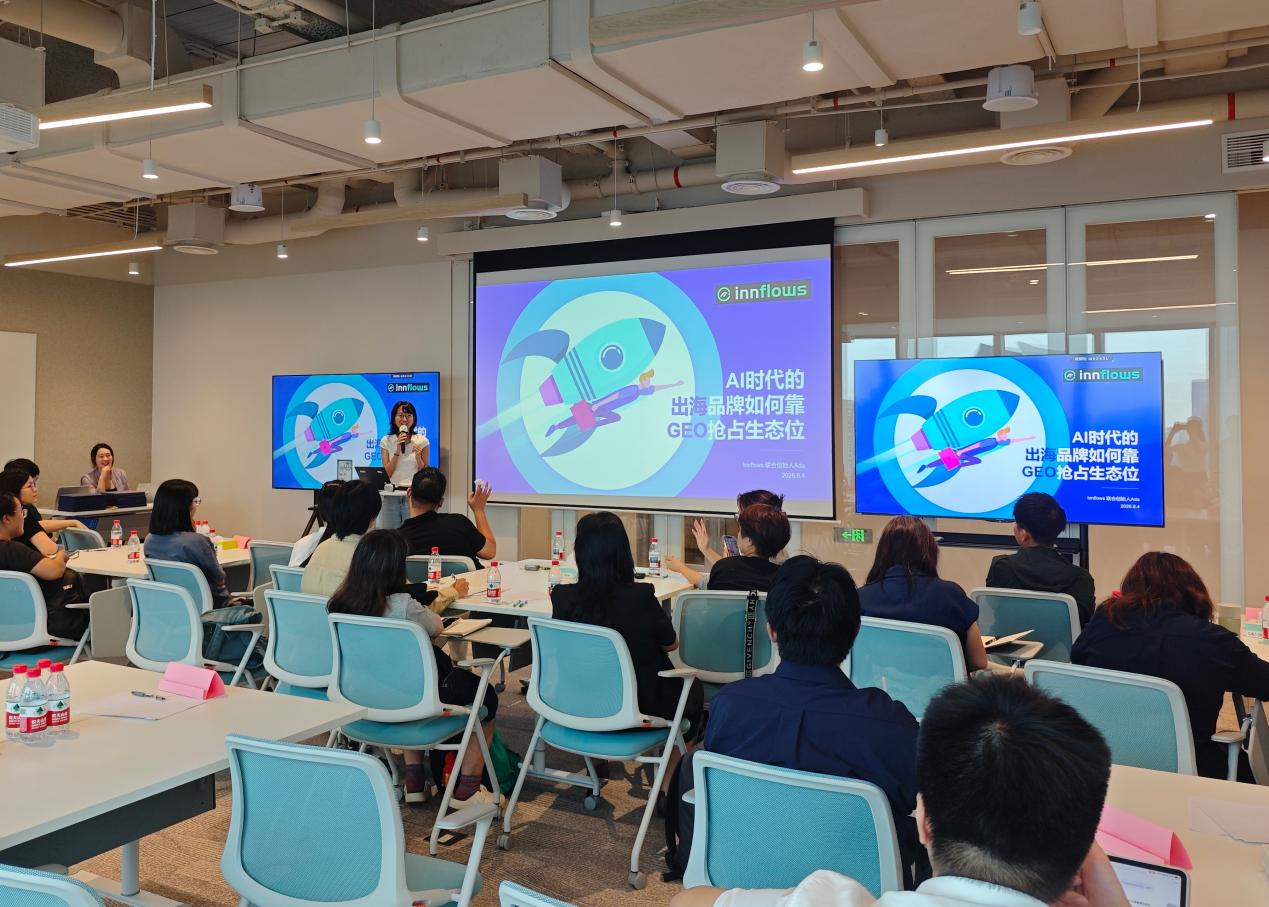
Innflows × AWS Agentic AI Hackathon: Building GEO on Amazon Quick
Innflows Joins AWS Agentic AI Hackathon: When Search Gives Way to AI, Brands Are Fighting a "Trust War"
When a shopper asks ChatGPT "which high-speed hair dryer is worth buying," the 200-word answer that comes back is, increasingly, what decides the next 30 minutes of their purchase journey.
Whether your brand shows up in those 200 words, how the AI talks about you, what evidence it cites — this is quietly rewriting the marketing playbook for the next decade.
On May 20–21, in Jiaxing, China, the 2026 Amazon Web Services China Partner Summit convened under the theme "Strategic Growth, Innovation, and Profitability in the Agentic AI Era." Innflows (innflows.com), an AI brand intelligence platform focused on Generative Engine Optimization (GEO), was invited to compete in the Agentic AI Hackathon held alongside the summit — and used the stage to turn "brand visibility inside AI answers" into a fully monitored, fully optimizable Agent pipeline.
---
1. Inside the Jiaxing Summit: Rallying the Partner Ecosystem for the Agentic AI Era
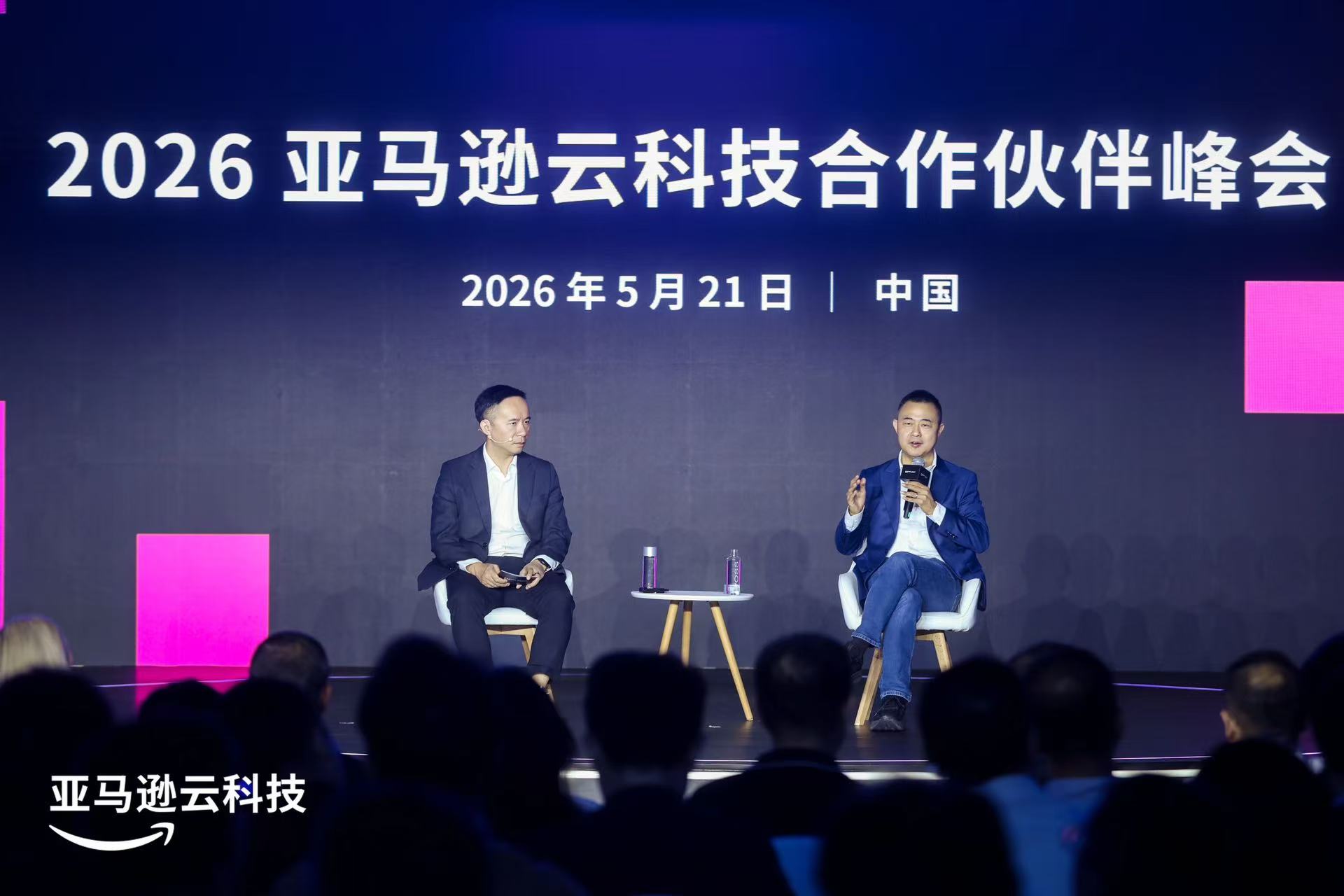
The 2026 China Partner Summit is widely regarded as one of the most important annual signals for China's cloud ecosystem. Ruisong Chu, AWS Vice President and Co-President for Asia Pacific, set the tone in his opening dialogue:
"Agentic AI applications are not optional — they are inevitable. The point is value creation. We are at a historic moment, stepping into the AI-first era."
Anchored to that conviction, AWS rolled out a coordinated package of partner initiatives at the summit:
- The APT (Agentic Process Transformation) Funding Program launched, providing staged financial incentives that help partners turn traditional business processes into Agent-driven workflows. It has already produced measurable outcomes in financial services, healthcare, manufacturing, and retail.
- The APT Acceleration Plan kicked off in partnership with Bain, Deloitte, BCG, Capgemini, IBM, Digital China, and other global and local SIs, targeting enterprise-grade Agentic AI transformation at scale.
- Three pillars of partner support: AI enablement (AI Assessment Funding, MAP enhancements), revenue growth (ISV Accelerate, Workload Migration Program upgrades), and operational efficiency (the new Partner Central, Partner Revenue Measurement / PRM).
- AWS Marketplace upgrades: now spanning 37 global regions with 6,000+ partners and 30,000+ products, with a new AI Agent category (3,000+ products live), Agent Mode, and bundled multi-product solutions.
The summit also featured three signature tracks — the Agentic AI Track, the Go-Global Innovation Track, and the Agentic AI Hackathon — and closed with the 2025 partner awards, recognizing Bricom (Consulting Partner of the Year), PingCAP (Technology Partner of the Year), VeryCloud and OceanBase (Rising Star Partner of the Year).
As Xiaolong Su, GM of AWS Partner Startup Program and Hong Kong Business, put it in his keynote: "Partners are not only expanding our reach — they are the catalyst for scaling Agentic AI transformation."
---
2. The Agentic AI Hackathon: 17 Partners Building on Amazon Quick
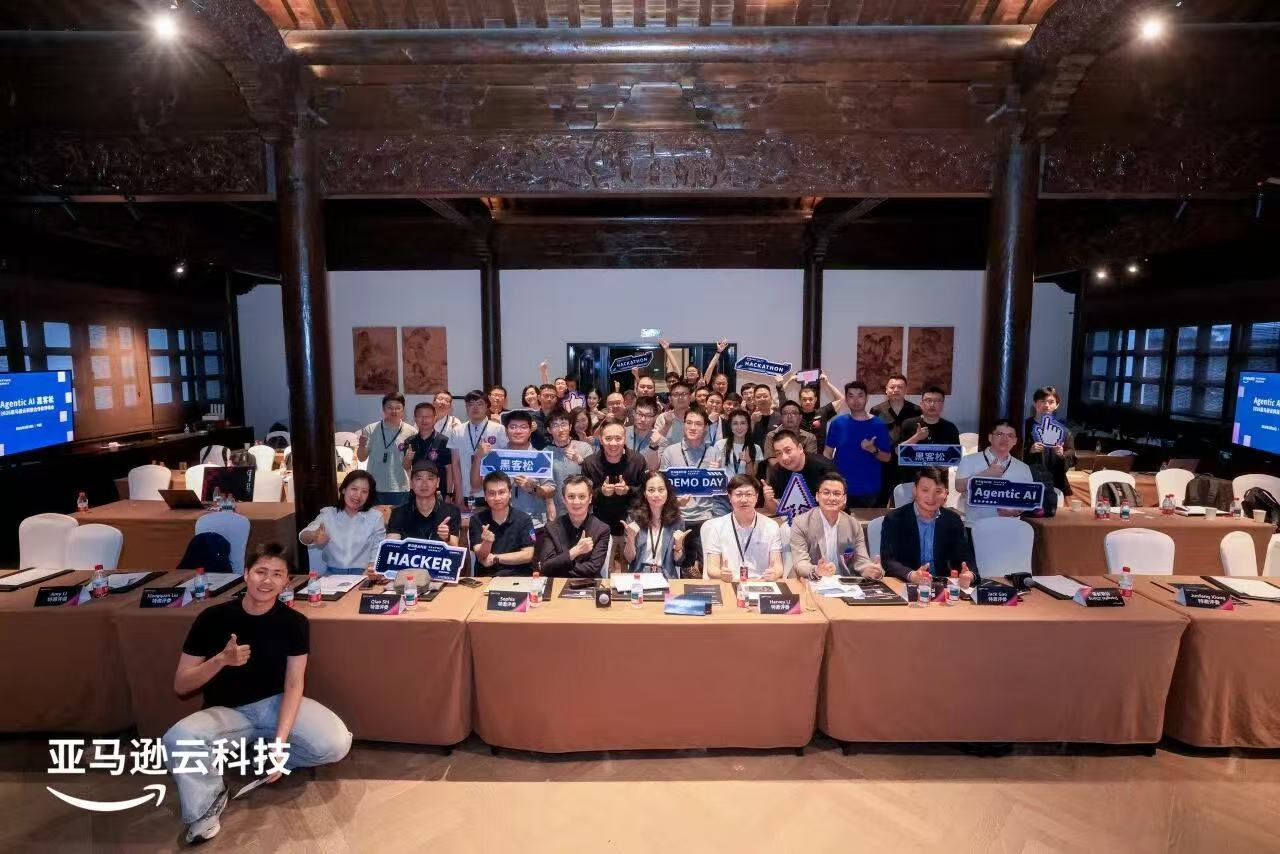
The Agentic AI Hackathon on May 20 was the most hands-on segment of the summit.
The event brought together 17 core AWS partners to build deeply on Amazon Quick — AWS's new enterprise-grade Agentic AI workspace launched in 2026. Solutions were judged across four dimensions:
- Autonomous decision-making — can the Agent orchestrate work the way an analyst would?
- Multi-tool coordination — can it move smoothly across business apps and data sources?
- Data intelligence — can it turn massive datasets into explainable insights?
- Process automation — can it close the loop from insight to action?
Submitted solutions spanned cross-border e-commerce, intelligent network operations, financial services, marketing, and enterprise operations, ranging from strategic platforms designed for long-term growth to lightweight applications that produce business value the same day.
Innflows competed in the marketing track. What we brought was a GEO Agent workflow for enterprise marketing teams — collapsing the typical "research → insight → content → distribution → monitoring → reporting" chain (normally five SaaS tools and two or three analysts) into a single Agentic experience inside Amazon Quick.
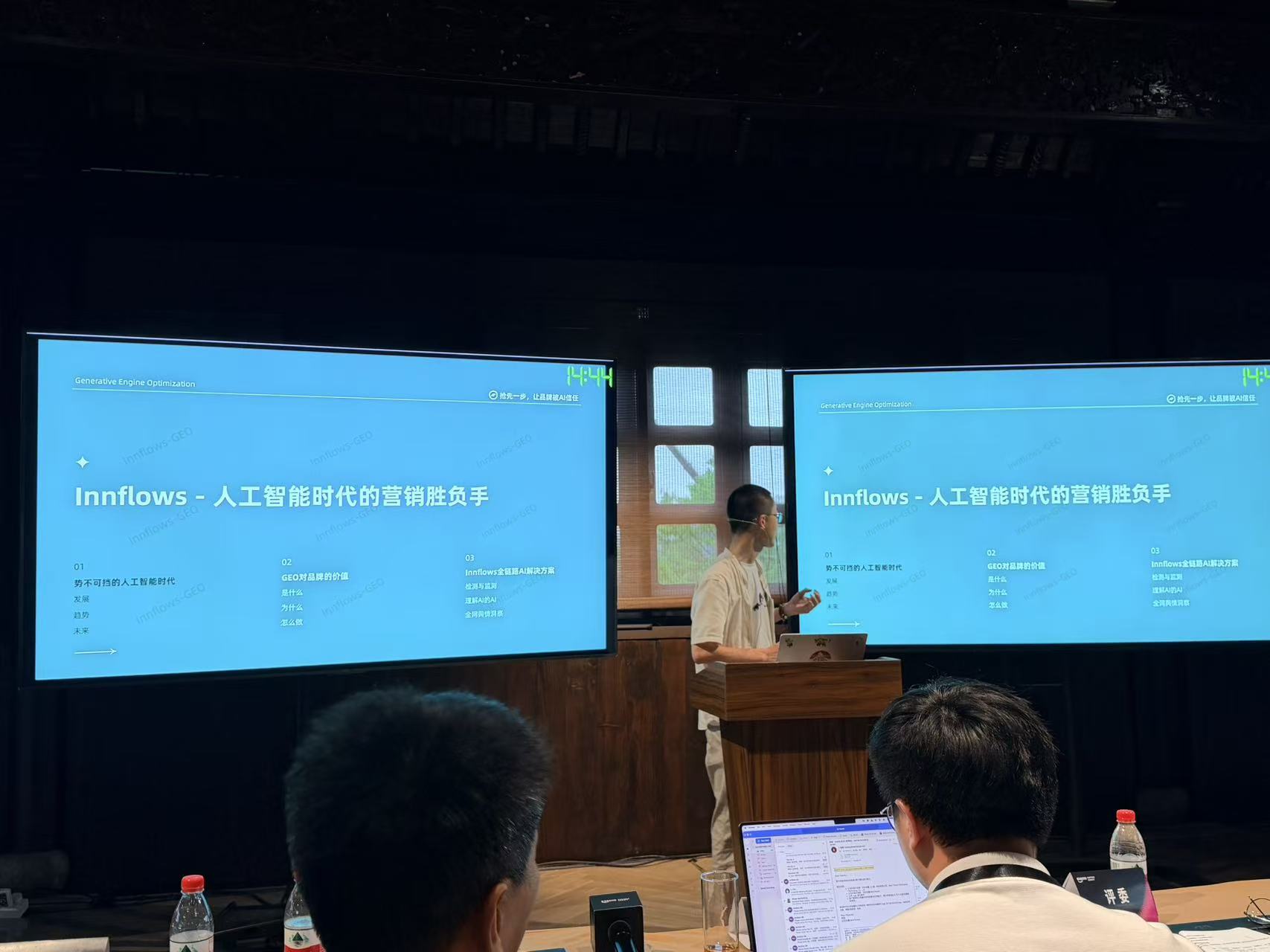
In the official AWS recap, the hackathon was described as having "fully demonstrated Amazon Quick's powerful capabilities and broad application potential in enterprise-grade Agentic AI scenarios" — and put solutions like Innflows', which Agent-ifies the entire marketing chain, firmly in the spotlight of the partner ecosystem.
---
3. The Entry Point Has Shifted: The Search Box Is Yielding to AI
For ten years, marketing has revolved around Google and PageRank — the contest was over search ranking. Today, the entry point itself is moving.
The numbers say it cleanly: monthly active users on consumer LLM applications grew from 310 million in January 2024 to 1.98 billion in February 2025 — a 538.7% jump in 14 months. AI Overview, ChatGPT, and Gemini are still adding users at triple-digit rates. Third-party analysts forecast that the GEO market will scale from US$1.09B in 2026 to US$17.15B by 2034, a CAGR above 40%.
The way humans interact with machines is also changing — from GUI to LUI, from "click the interface" to "state your intent." Users no longer think in keywords. They tell the AI what they want, and let the AI handle interpretation, reasoning, and recommendation.
For brands, the implication is blunt: users may no longer open a search engine, may no longer visit your homepage first — they may just ask the AI. The battlefield is no longer "what position you rank in search results," but "whether your brand shows up in that 200-word AI answer."
In the search era, brands competed for rank position.
In the AI era, brands compete for mindshare inside the AI.
From PageRank to TrustRank — that's what GEO is for.
---
4. Why Innflows: Turning "Will the AI Recommend Me" Into a Measurable Index
Why is GEO the most valuable bet in the marketing track? Research by Princeton and collaborators in GEO: Generative Engine Optimization gave a clear answer: AI is "picky" when generating answers. Content with clear intent, fluent expression, structured formatting, supporting data, credible citations, and professional context is preferentially adopted. AI is not searching — it is judging.
Innflows turned that pattern into a product. Our proprietary FLOWS Brand Trust Model and Full-Link Intent Simulation Engine quantify how a brand actually performs inside AI answers across five dimensions:
| Dimension | What it really means | Example |
|---|---|---|
| Find-ability | Are you seen at all? | Frequency, position, and prominence of brand mentions in AI answers |
| Leading Orientation | Are you preferred? | Does the AI recommend you, or just mention you in passing? |
| Origin Verification | Are you credible? | How authoritative and traceable are the sources the AI cites about you? |
| Website Structure | Is your door open? | Does your site give the AI structured, readable entry points? |
| Spread Index | Is your voice loud enough? | How widely is your brand discussed across the public web? |
A concrete example: on the dashboard of a coffee machine brand we serve, the "automatic coffee machine" scenario on DeepSeek showed an LO (Leading Orientation) score of just 65 — the AI was mentioning the brand, but not recommending it. Attribution traced the issue to a recent negative review carrying disproportionate weight in the AI's reasoning. The Agent immediately proposed fixes: a fresh batch of independent expert reviews, structured rating data, and a reorder of the FAQ block on the product page to prioritize answer-first formatting. Two weeks later, LO climbed back to 78.
We took something that has long felt like alchemy — "will the AI recommend me?" — and turned it into a measurable, attributable, optimizable index. That is Innflows' answer for the marketing track.
---
5. The Four-Step Playbook: Writing Content the AI Can Understand
In our hackathon presentation, we framed GEO content production as a four-step closed loop, with the entire process driven by Agents:
- Intent recognition — start from brand profile and scenario, then reverse-engineer the high-value questions real users will ask the AI.
- Stay grounded in fact — align product features with real user pain points; produce professional, verifiable, citation-worthy claims.
- Speak the AI's language — refine semantic structure, evidence, media endorsements, and authoritative citations to match what AI models actually prefer.
- Continuously monitor — track AI-answer changes across models, scenarios, and time, and feed the signal back into content iteration.
Underpinning this loop is the Innflows AI-Adversarial Engine — an in-house adversarial analysis engine built on open-source LLMs that reverse-engineers the answer preferences and citation logic of the major AI platforms. For the first time, "why the AI recommends what it recommends" becomes both explainable and actionable.
This is what separates GEO from traditional SEO: not stuffing keywords, but earning a place inside the AI's reasoning chain — to be understood, cited, and recommended.
---
6. Already Proven ROI: Trust Score +30%, AI Traffic +14.2%
GEO is not a story. It is something you can put on a P&L.
Take a Chinese consumer electronics brand expanding overseas, focused on motor-driven products. Since beginning work with Innflows in April, the brand executed three steps:
- AI surface monitoring — quantify the brand's actual performance inside major LLM answers and benchmark its starting position.
- GEO audit of the website — identify content gaps the AI doesn't understand, doesn't trust, or won't cite.
- Reverse content optimization — restructure key evidence, professional language, and structured information to match AI preferences.
Results within the engagement window:
- FLOWS Brand Trust Score rose from 62 to 81 — a 30.6% lift.
- Monthly visits attributed to AI surfaces (clicks on links cited inside ChatGPT, Gemini, AI Overview answers, etc.) grew 14.2%.
- Recommendation slot frequency in core high-value scenarios ("best high-speed hair dryer comparison," "which dryer is gentler on hair") on ChatGPT and DeepSeek increased from 38% to 71%.
Similar curves are showing up across our other DTC and global-expansion accounts: from "no mention" to "naturally referenced" on ChatGPT and Gemini, from "also-ran" to "first recommendation" on DeepSeek and Doubao, from supporting cast to flagship brand inside Google AI Overview.
GEO is no longer the next conceptual wave. It's a channel that already shows up on the quarterly growth report.
---
7. Innflows × Amazon Quick: Compressing an Entire Marketing Department Into One Agentic Teammate
The engineering bar for a real GEO workflow is far higher than typical SaaS — you need to simulate massive volumes of authentic user questions in parallel, cross-compare across multiple LLMs, and feed AI-preference attribution back into content strategy in near real time. Our key accelerator at the hackathon was Amazon Quick.
Amazon Quick is AWS's new enterprise-grade Agentic AI workspace, positioned as a "digital teammate that actually gets things done" — connecting an organization's apps, data, and tools, turning employees' questions into answers, and answers into actions. Innflows migrated the entire GEO workflow into Amazon Quick, giving brand teams what is effectively an Agentic teammate that understands AI, content, and data simultaneously:
- Multi-source data access — Through Quick's native connectors, a single prompt like "show me how we performed on DeepSeek in the coffee machine scenario this week" automatically pulls and aligns data from S3, Salesforce, Shopify, and Google Search Console — delivering in minutes the cross-platform reports that used to take two days.
- Shared Spaces — CMOs, content teams, SEO leads, and brand owners work inside the same Space, querying the same Agent and looking at the same source of truth.
- Closed-loop action — Innflows registered our Content Repair Agent, Structured Data Completion Agent, and Site GEO Audit Agent into Quick. A single prompt — "fix this scenario" — drives the work end-to-end, all the way to the CMS update.
- Enterprise-grade compliance — Quick's native row-/column-level permissions and data sovereignty controls keep brand monitoring data inside the regions and access boundaries the customer already manages.
On the underlying platform, Innflows runs multi-model parallel inference on Amazon Bedrock and Bedrock AgentCore, while Amazon EKS with Karpenter and AWS Graviton delivers minute-scale elasticity — compressing a million-question, full-model scan from "an overnight job" to "a few dozen minutes."
This echoes Ruisong Chu's framing at the summit — "value is shifting from infrastructure to data and knowledge, the Agentic platform, and Agentic applications" — three layers Innflows occupies precisely. Amazon Quick is our orchestration hub at the Agentic platform layer, while GEO sits at the application layer as a workflow marketing teams can actually use.
---
8. What's Next: Making GEO the Default Setting for Global Brands
The hackathon is one moment. Our roadmap is built around a single goal — turning GEO from an analyst-driven project into a monthly standard practice for every brand:
- GEO Insight Agent — Ask, in natural language, "why did our recommendation rate drop on ChatGPT this week?" and get an attribution analysis on demand.
- Content Forge Agent — Using the brand's knowledge graph and FLOWS preference profile, generate AI-friendly product pages, FAQs, and blog posts in one click.
- Crisis Watch Agent — Real-time monitoring of negative signals across the public web and inside AI answers, with automatic alerts to PR teams.
- Marketplace Bundle — Package the full GEO solution as a turnkey offering on AWS Marketplace, so global customers can onboard with zero code.
"For the past decade, marketers competed for Google rankings. For the next decade, the competition is over that one paragraph inside the AI's answer."
— Innflows team, post-hackathon
For Chinese brands going global, this is the first time they get to compete with global incumbents on the same AI answer sheet. Innflows wants to be the pen that writes the right answer — for every brand willing to take that competition seriously.
---
About Innflows
Innflows is an AI brand intelligence platform dedicated to Generative Engine Optimization (GEO / AEO). Powered by the proprietary FLOWS Brand Trust Model, Full-Link Intent Simulation Engine, and AI-Adversarial Engine, Innflows helps brands stay discovered, trusted, and recommended across ChatGPT, Gemini, Claude, DeepSeek, Qwen, AI Overview, and other generative AI surfaces — turning invisible AI traffic into a measurable, attributable, optimizable brand asset.
Innflows currently works with brands such as Laifen, Violy, Mango Classmate, and CeCe Magic Piano, helping them stay seen and recommended across ChatGPT, Gemini, Claude, DeepSeek, and other major AI surfaces.