How to Set Up Enterprise Visibility Tools That Actually Track AI Visibility
Traditional visibility tools can't track where your brand shows up anymore. Gartner predicts search engine volume will drop 25% by 2026 as users move to AI answer engines. Zero-click searches now make up 58% of US queries, with AI-generated answers playing a central role.
Your enterprise needs dedicated AI visibility tools built for Generative Engine Optimization (GEO), not just traditional SEO metrics. We'll walk you through setting up visibility infrastructure that tracks your brand on ChatGPT, Gemini, and AI Overviews using multi-dimensional scoring.
What Are Enterprise AI Visibility Tools and Why They Matter
Understanding AI Search Performance Tracking
AI search tracking monitors how your brand appears on AI-powered platforms like ChatGPT, Perplexity, Google AI Overviews, and Gemini. Traditional rank tracking monitors specific positions, but AI visibility tools focus on presence and prominence in combined answers.
These AI brand visibility tools track several dimensions. Citation frequency measures how often AI engines cite your content when answering queries in your domain. Brand mentions capture direct references to your brand name, products, or services. Source attribution quality determines whether you're cited as an authoritative primary source or mentioned in passing. Competitive visibility reveals how your citation rate compares to competitors who get cited when you're not.
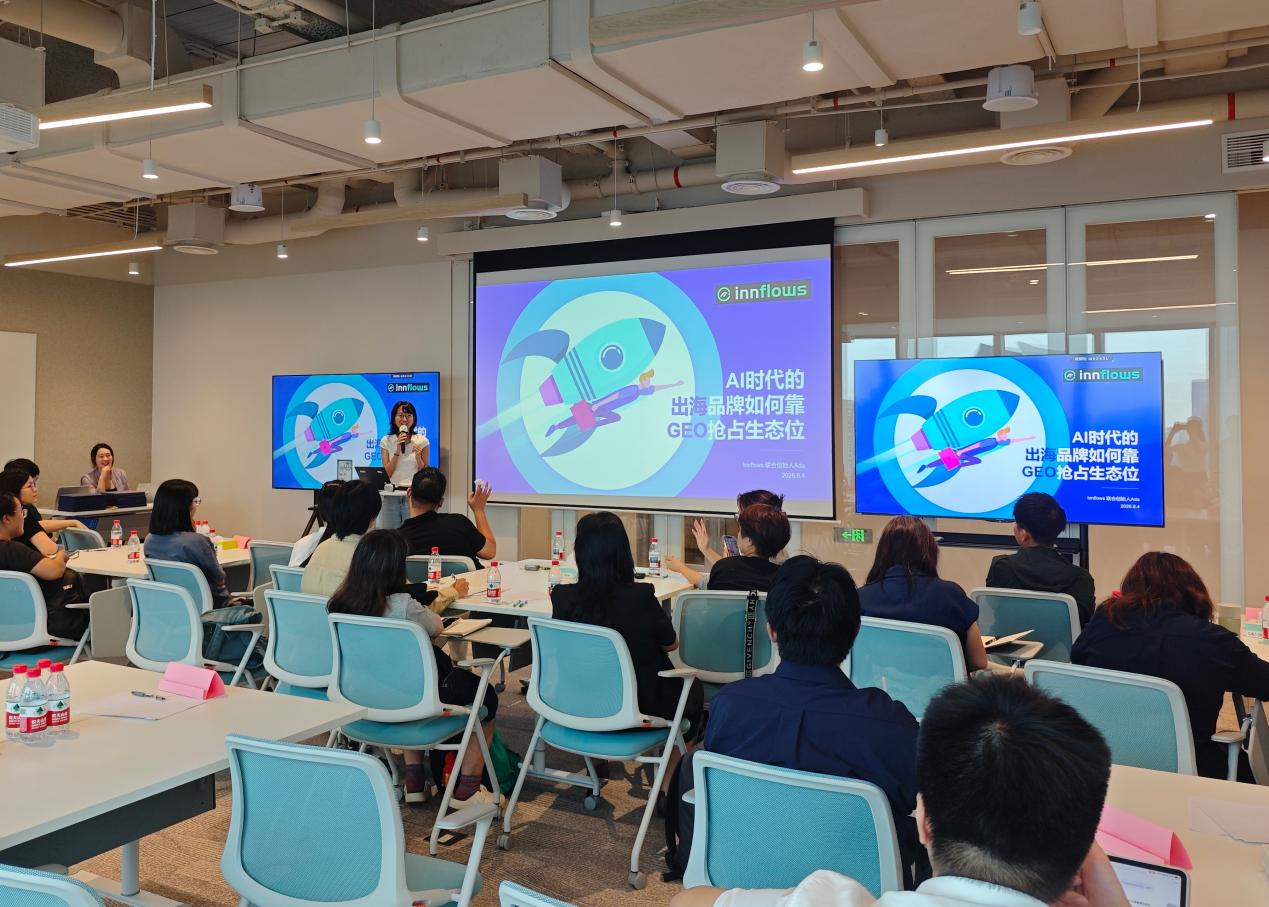
Innflows' methodology starts with analyzing brand user personas and user intent. You generate specific topics based on this intent and simulate questions from a variety of user viewpoints. You then monitor responses on AI platforms of all types. You can define your GEO optimization strategy and cadence by evaluating scores across different dimensions.
The measurement gap creates real challenges. When someone asks ChatGPT or Perplexity a question in your category, you have no idea if your brand appears in the response. You can't measure if optimization efforts work. Competitors might capture all AI citations while your SEO dashboard shows green across the board.
Key Differences Between Traditional SEO and GEO Tools
SEO optimizes for rank-based retrieval and clicks. GEO optimizes for inclusion and citation in AI answers. The core differences reshape how you approach visibility:
Traditional SEO tools emphasize keyword density analysis, backlink quantity metrics, ranking position tracking, and technical auditing to ensure search crawler compatibility. GEO tool capabilities include entity mapping and semantic relationship modeling, AI citation tracking on answer engines, multi-perspective content analysis, answer formatting optimization, and knowledge graph integration.
SEO measures what happened at your website: clicks, rankings, session duration. Every metric comes downstream of a visit. If there was no click, there is no data. GEO measures what happened before the click—what AI said about your brand when a buyer formed their shortlist. None of these GEO metrics appear in Google Search Console.
Your website serves as the primary asset in traditional SEO. A well-optimized site with strong backlinks competes for most keywords. GEO operates differently. Your owned content represents some of the sources an AI platform references. The rest includes what publications say about you, how you appear on review platforms, what communities discuss in forums, and whether that information stays consistent across all sources.
Why Enterprise Brands Need Dedicated AI Visibility Infrastructure
Perplexity alone processes nearly a billion queries monthly [1]. ChatGPT has around 800 million users each week [2]. OtterlyAI's 2026 research shows that 15% of all website traffic now originates from AI agents and bots, with ChatGPT accounting for 56% of AI search referral traffic, followed by Gemini at 18% and Perplexity at 8% [3].
AI-referred traffic converts differently than organic search. AI referral visits show 27% lower bounce rates and longer session durations. Users arriving via AI citations already received a recommendation. But the zero-click rate in Google's AI Mode reaches 93% [4] and collapses traditional attribution models.
Enterprise brands face specific infrastructure needs. Multi-platform coverage becomes a must since ChatGPT, Perplexity, and Google AI Overviews share only 10-15% citation overlap [4]. Single-platform monitoring creates 85-89% blind spots in your visibility picture.
Therefore, enterprises need tools that handle complexity across brand portfolios, provide role-based access for different teams, and offer custom integrations with existing marketing tech stacks. AI-generated traffic represents 2-6% of B2B organic traffic and grows at 40%+ month-over-month, 165x faster than organic search [4]. The brands that establish AI visibility infrastructure now build competitive advantages that become difficult to replicate as adoption accelerates.
Step1: Define Your AI Visibility Tracking Requirements
Start by cataloging your brand's customer segments before selecting visibility tools. The process mirrors persona development but with an AI-specific lens. You need to understand which audience archetypes interact with AI platforms and what they ask.
Identify Your Brand User Personas and Search Intent
Build detailed user personas that reflect how different segments develop AI queries. Create profiles covering demographic traits (age, income, location, job title), behavioral patterns (how they research and where they consume information), pain points they express, and goals that drive their searches. Companies using personas to segment markets report 93% exceed their lead and revenue targets. Persona-based approaches help 56% generate higher quality leads [5].
AI search intent is fundamentally different from keyword-based intent. AI platforms interpret the purpose behind queries through semantic meaning and context, not just keyword patterns. Focus on four intent categories when building your persona library:
* Informational intent covers "what is," "how does," or "why do" queries where users seek education.
* Navigational intent has brand-specific searches like "go to" or direct brand references showing familiarity.
* Comparative intent captures "X vs Y," "best tools for," or evaluation queries where AI acts as analyst.
* Transactional intent signals action through "buy now," "schedule demo," or "get quote" phrases [6].
Mine real prompts from multiple sources. Extract questions from "People Also Ask" boxes, support tickets, sales call transcripts, and community forums. Use these actual phrases as H2 and H3 headings in your content architecture. Create FAQ sections mapping query variants and surrounding context [7].
Modern queries show hybrid characteristics though. A search like "best hiking boots" historically appeared informational but now triggers mixed results combining product recommendations and guides with FAQs [8]. Test your target queries on AI platforms to identify these hybrid patterns.
Map Your Product Categories and Target Topics
Catalog topics aligned with business objectives and assign intent labels to each. Build topic-based content maps covering related subtopics and questions AI might surface [9]. This creates the foundation for question libraries generated in the next step.
Product taxonomy determines AI visibility through proper categorization. Misclassifications affect roughly 10% of listings and reduce visibility [4]. Brands using inconsistent category structures lose control over where products appear in filtered searches.
Create audience-specific pages rather than generic overviews. Analysis shows granular, audience-specific content receives 2.3x more AI citations than generic product pages when responding to targeted queries [10]. Develop dedicated pages for company sizes (enterprise and mid-market), specific roles (CEO, Operations Manager, IT Director), industry verticals (healthcare and finance), and geographic markets with distinct requirements.
Pages scoring 8.5/10 or higher on semantic completeness metrics demonstrate 340% higher inclusion rates in AI-generated answers [10]. Address topics in detail by covering specific problems your solution solves, step-by-step implementation processes, expected outcomes with success metrics, and integration requirements.
This foundational work determines which queries your visibility tools will monitor and which AI responses matter for measurement.
Step2: Generate User Intent-Based Question Libraries
Question libraries power visibility tools by simulating real user queries in your topic landscape. Keyword lists tracked exact-match searches. Question libraries reflect how people prompt AI platforms using natural language and conversational phrasing.
AI understands the intent behind your query, not just the keywords
AI platforms interpret semantic meaning and context rather than matching words. Natural language processing analyzes the underlying need when someone searches for "shirt to wear to a wedding" or "bike for rocky terrain" without requiring exact keyword matches [11]. This radical alteration changes how you build tracking queries.
Search engines now detect context using location, time, device type and past activity to adjust results while preserving core query meaning. They classify intent across informational and transactional categories, then deliver results lined up with user goals rather than query text alone [12]. Users search by asking questions, describing problems and expecting instant answers [13].
Queries carry inherent ambiguity that complicates AI interpretation. A search for "hotels" shifts meaning based on context. It signals navigational intent when finding nearby locations or consideration intent when making online reservations [14]. AI systems handle complexity better when they spot queries mixing multiple intents, such as "Is product X worth buying and where's the cheapest place to get it?" [12].
Generate questions based on user intent topics
RAG-based intent detection eliminates manual labeling of thousands of examples. Use AI to generate diverse training questions covering your topic map from Step 1. Prompt AI to create questions specifying intent type (definitional, procedural, comparative, conditional), complexity level (simple, moderate, complex), domain focus and expected answer type (yes/no, list, explanation, citation). This approach generates hundreds of realistic questions with rich metadata without manual labeling [15].
Transform legacy keywords into evaluation criteria users feed into prompts. Take bottom-of-funnel keywords and break them into conversational comparison prompts. Convert "agency project management tools" into feature-level comparisons: "Which project management tool has better client portals: Asana or Monday?" or "Compare ClickUp and Asana for integrated time tracking and agency billing" [16].
Modern buyers inject constraints into AI queries rather than asking broad questions. They prompt: "Which project management tool integrates with Slack, offers client portal access, and costs under USD 20.00 per user for a 50-person creative agency?" [16]. Your content must feed AI the exact constraint data it needs to combine answers. Therefore, structure questions around these conversational constraints covering integration requirements, pricing thresholds, team size specifications and feature combinations.
Use intent-modifier keywords in your question phrasing. Words like "how," "best," "why," "vs" and "cost of" signal intent patterns AI platforms recognize. Mine additional questions from People Also Ask boxes, AI Overviews and tools like AlsoAsked and Answer the Public that generate visual maps of related questions connected to your keywords [1].
Generate questions covering edge cases and ambiguous scenarios to create resilient datasets [15]. Each question becomes a monitoring prompt your AI visibility tools will track across platforms.
Step3: Select the Right Enterprise AI Visibility Tools
Once you've built your question libraries, selecting the right AI visibility tools determines measurement accuracy across your GEO program. Most platforms now share baseline functionality, but enterprise needs require assessing specific capabilities beyond simple mention tracking.
Assess Multi-LLM Coverage and Platform Support
Most AI visibility tools track between 3 and 5 AI platforms. Enterprise options like Profound and Conductor cover 5 or more including Copilot and Claude [17]. But platform coverage represents a critical factor since ChatGPT, Perplexity, and Google AI Overviews share only 10-15% citation overlap. Single-platform monitoring creates 85-89% blind spots.
Track where your buyers assess options, not every model available. ChatGPT and Perplexity matter for research-heavy queries. Google's AI Overviews and AI Mode matter for SERP-adjacent discovery [18]. Focus on engines your audience uses rather than maximizing platform count.
Key capabilities separate simple tools from enterprise solutions. Look for prompt-level tracking that shows actual AI responses rather than abstract scores. Citation transparency reveals which sources AI systems cite when mentioning your brand. Competitor benchmarking calculates share of voice across the same queries [19][18]. Without exportable citation data, optimization becomes guesswork.
Compare Pricing Models and Scalability Options
AI search visibility tools range from USD 20.00 to USD 3,000.00 monthly [20]. Tools vary by a lot in pricing from USD 39.00/month for simple plans to USD 2,000.00+ for enterprise features [19].
The median cost sits at USD 99.00/month. The sweet spot offering best value-to-feature ratio falls between USD 79.00-USD 149.00/month [20]. Enterprise solutions start around USD 1,500.00+/month [17].
Establish continuous monitoring for different AI models
Continuous monitoring tracks AI outputs and detects performance variations due to changes in data or user interaction [21]. Weekly tracking is enough for most brands. Daily monitoring only makes sense for high-risk or ever-changing categories [18]. Set tracking frequency based on your category velocity rather than defaulting to maximum cadence.
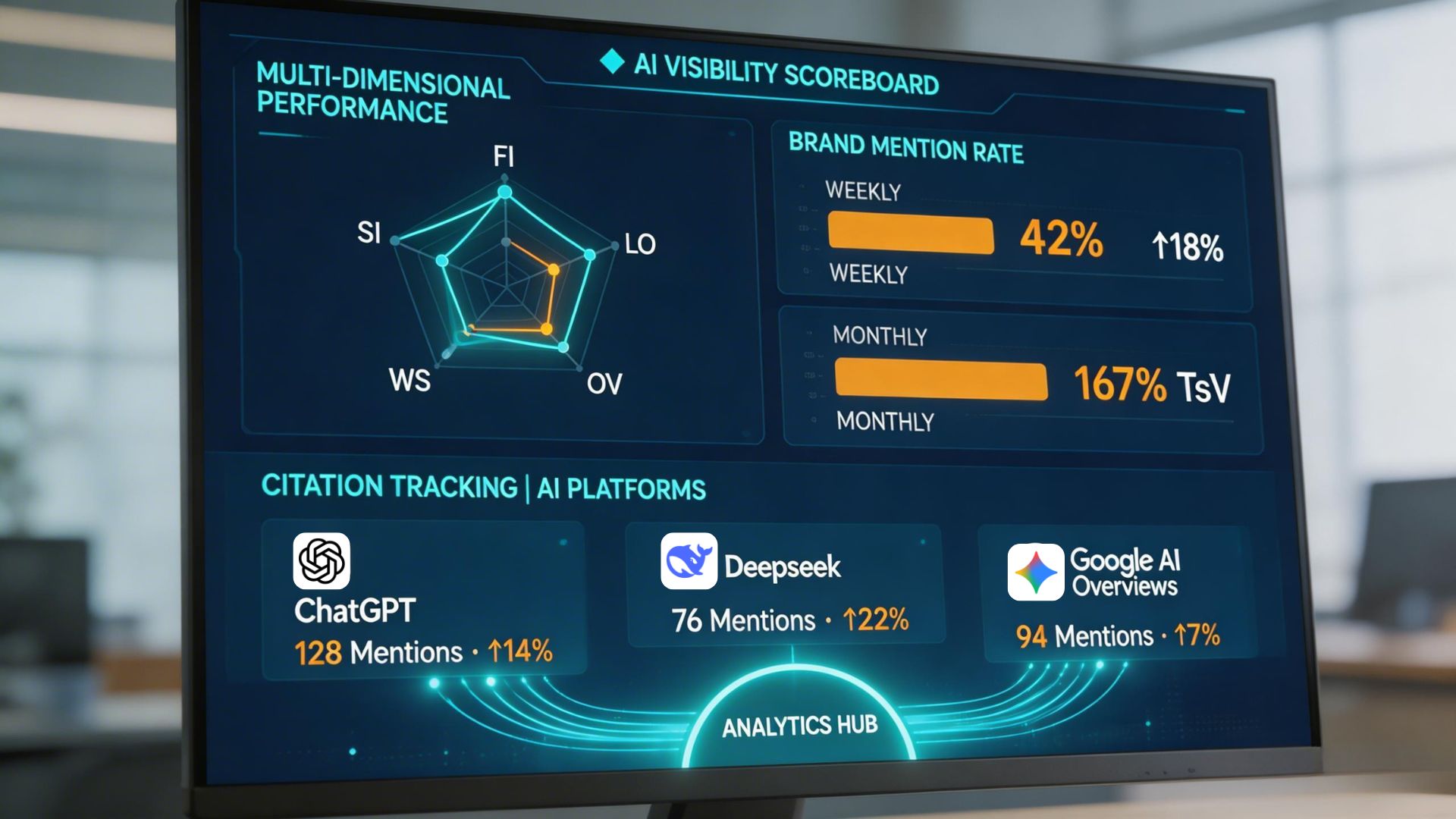
Step4: Analyze Performance Using Multi-Dimensional Scoring
Multi-dimensional scoring replaces binary visibility metrics with nuanced performance analysis. You define subsequent GEO optimization strategy and cadence when you evaluate scores across different dimensions.
Find-ability: Is your brand mentioned in the AI's response
Brand Mention Rate measures the percentage of tested prompts where your brand name appears anywhere in AI-generated answers. This establishes whether AI systems think your brand is relevant enough to reference when answering questions in your category. Divide mentions by total prompts tested to calculate [22].
Leading Orientation: Does the AI actively recommend your brand?
Recommendation Rate distinguishes passive visibility from active endorsement. This metric captures when AI describes your brand as a choice or advised action rather than listing it among others [22]. ChatGPT mentions brands in 99.3% of eCommerce responses with 5.84 average brands per response, while Google AI Overview has them in just 6.2% with 0.29 average brands [2].
Origin Verification: Does your brand appear in the AI's citations or sources
Source attribution credits the sources of information AI uses to generate responses. Strong attribution means AI engines credit your content when they reference your information and position you as an authority [3]. Perplexity averages 8.79 citations per response [2].
Website structure: Can the AI read and parse information from your website?
Clear hierarchies enable AI extraction. AI can't extract clean answers if your site lacks proper headings or structured summaries. Schema markup labels content so AI can interpret and surface it accurately [23].
Spread index: Is your content capable of being spread
For a website to achieve meaningful visibility within AI ecosystems, the essential precondition is establishing a robust network of brand dissemination and distribution across public information channels, including search engines and specialized vertical platforms.
Conclusion
You now have a complete framework to track your brand's performance on AI search platforms of all types. Traditional SEO dashboards won't show you what matters anymore—whether ChatGPT or Perplexity recommend your brand when buyers form their shortlists.
Define your user personas first and build intent-based question libraries. Tools that track multiple AI platforms will eliminate the 85-89% blind spots that single-platform monitoring creates. Multi-dimensional scoring measures beyond simple mentions.
AI-referred traffic grows 40%+ monthly and converts better than organic search. Brands that establish visibility infrastructure now build advantages competitors cannot copy later. Track your performance today.
References
[1] - https://sureoak.com/insights/intent-driven-search
[3] - https://genezio.com/glossary/source-attribution/
[4] - https://www.intelligencenode.com/blog/mapping-product-taxonomy-across-marketplaces/
[7] - https://growbydata.com/ai-search-visibility-the-complete-guide/
[8] - https://www.womenintechseo.com/knowledge/boost-category-pages-ai-visibility%20/
[9] - https://sat.brandlight.ai/articles/which-ai-visibility-tool-targets-by-topic-and-intent
[10] - https://almcorp.com/blog/ai-search-optimization-guide-llm-visibility-strategies/
[11] - https://www.bloomreach.com/en/blog/understanding-customer-intent-ai-search
[12] - https://insightland.org/blog/intent-based-search-why-ai-understands-customers-better-than-keywords/
[14] - https://www.algolia.com/blog/ai/how-to-identify-user-search-intent-using-ai-and-machine-learning
[16] - https://llmclicks.ai/blog/ai-visibility-framework-intent-mapping/
[17] - https://www.stackmatix.com/blog/ai-search-tools-software-comparison
[18] - https://www.brainlabsdigital.com/the-10-best-tools-for-tracking-ai-visibility/
[19] - https://www.frase.io/blog/the-10-best-ai-visibility-tools-in-2026
[20] - https://www.rankability.com/blog/how-much-should-you-pay-for-ai-search-visibility-tracking-tools/
[21] - https://www.wisecube.ai/blog/why-continuous-monitoring-is-essential-for-maintaining-ai-integrity/
[22] - https://www.visiblie.com/blog/ai-visibility-metrics
[23] - https://ligermarketing.com/how-to-structure-your-website-for-ai-powered-discoverability/