How to Refresh Content for GEO: 6 Steps to Win AI Citations in 2026
How to Refresh Content for GEO: 6 Steps to Win AI Citations in 2026
Traffic to U.S. retail sites from generative-AI sources jumped 1,200% between July 2024 and February 2025. Content refreshing has become critical to maintain visibility in AI search results then.
The reality? AI search is growing 10x faster than traditional search adoption, and 62% of users now start their search experience with AI tools. Your pages risk losing AI citations altogether if you don't address content decay through regular content upgrades.
In this piece, we'll show you how to refresh your blog content to win AI citations and capture this high-converting traffic source while maintaining content freshness.
Understanding Content Decay and GEO
What is Content Decay
Content decay refers to a gradual decline in organic traffic, rankings, and relevance that happens to published content over time [1]. This isn't a sudden drop or a result of poor quality. Your pages lose their competitive edge as information becomes outdated, search intent evolves, or competitors publish more current alternatives.
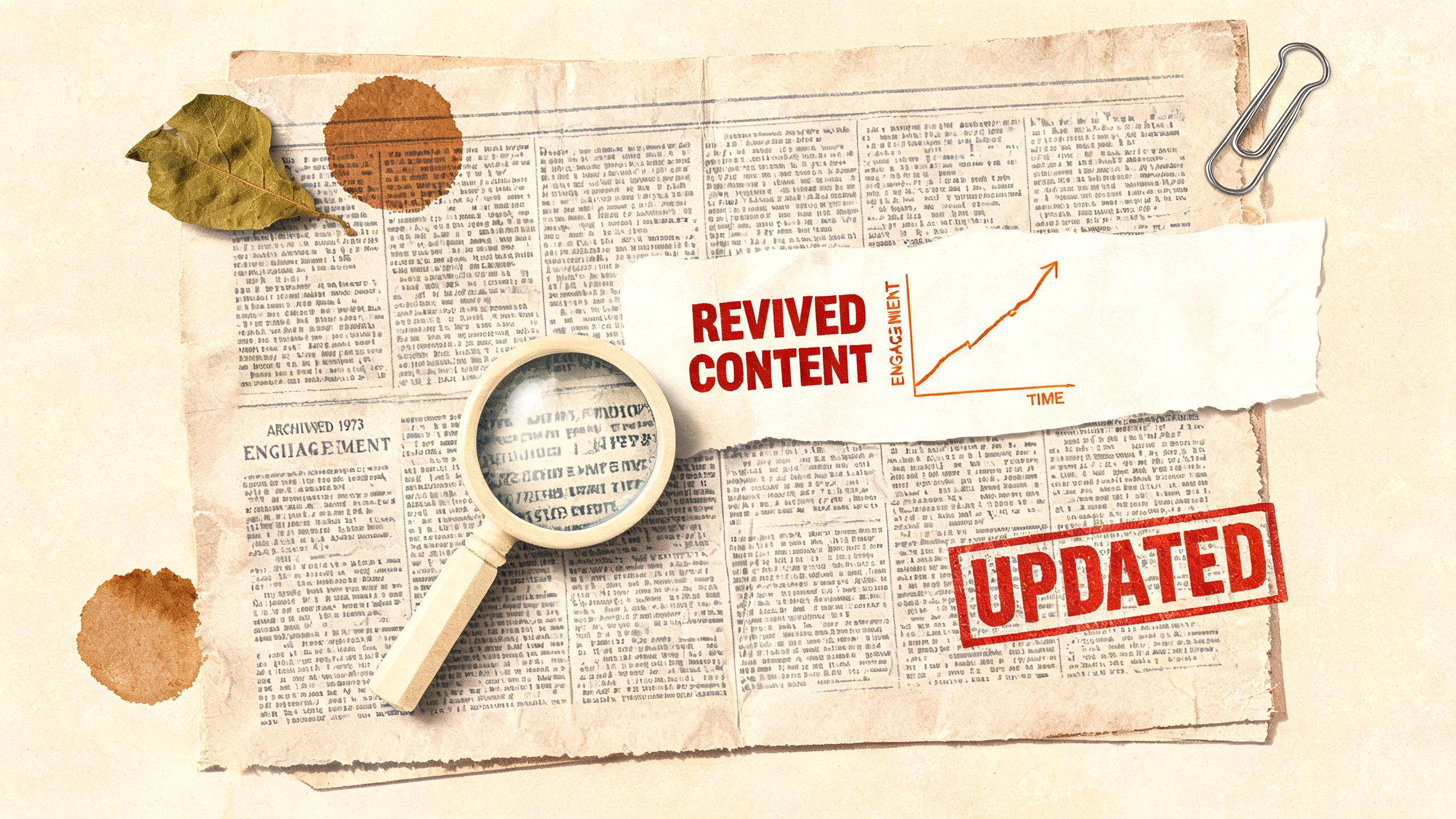
Research from Ahrefs found that 90.63% of content gets no traffic from Google at all [1]. The decline follows a predictable pattern for pages that do attract visitors. Content moves through five distinct phases: an original spike after publication, a trough where growth stagnates, a growth phase as rankings improve, a plateau where performance stabilizes, and a decline phase where traffic drops off [2].
Several factors cause this decay. Competitors publish fresher content that better serves user needs. Search algorithms update and change how they review topics. User interests change, as showed when search queries for digital cameras collapsed after the iPhone launched [1]. Relevance fades for time-sensitive content covering current events or trends as interest moves elsewhere [2].
Websites that neglect aging content can lose up to 20% of their organic traffic annually [1]. The compounding effect becomes severe for sites with hundreds or thousands of pages. New content gains can no longer offset losses from decaying older pages.
Why AI Citations Require Fresh Content
AI assistants prefer citing fresher content compared to traditional search results. The average age of URLs cited by AI assistants is 1064 days, versus 1432 days for organic search results. This makes AI citations 25.7% fresher. ChatGPT shows the strongest preference and cites URLs that are 393 days newer than organic Google results in their in-text references and 458 days newer in their citations [3].
This preference exists because LLM training data updates every few months or more, while search-integrated AI responses reflect current information. LLMs prioritize drawing on sources that are current and authoritative to maintain credibility [4]. An LLM with access to up-to-date web content through search engine integration or retrieval augmentation will favor fresh content. This provides timely and accurate answers.
Content that used to appear in AI answers stops being cited as it ages. URLs move through a visibility lifecycle: launch and indexing, growth and discovery where first citations appear, plateau and decay as competitors publish fresher resources, and refresh and resurgence when substantive updates restore visibility [4].
Content Freshness vs Traditional SEO Signals
Traditional SEO freshness focuses on how search engines rank and display links. LLM freshness signals influence what gets summarized, paraphrased, or cited inside AI-generated answers [4]. Google's Query Deserves Freshness (QDF) algorithm determines when users want new information and affects 6 to 10% of searches. This applies to recent events, recurring events like sports scores, and content that updates such as product reviews [5].
AI systems review freshness differently. They assess temporal relevance and whether your content reflects current knowledge on a topic. An outdated page loses to a recently updated piece that shows awareness of recent developments, even from a high-authority domain. The freshness advantage compounds over time. Pages cited once become more visible and attract more citations in a reinforcing loop [6].
The half-life of content visibility has collapsed [6]. What used to decay over 12-18 months now declines in 3-6 months for competitive topics. AI systems adjust within days when they detect competitors have published more current information and switch citations almost right away.
How to Find Content That Needs Refreshing
Check Your AI Citation Status
Start by monitoring where and how AI platforms reference your content. Citation tracking tools measure how often AI assistants mention, cite, and recommend your brand in conversational responses [7]. These platforms track three distinct citation types: direct link citations where AI includes a clickable link to your domain, brand mentions without links where you're named but not sourced, and implied sources where AI repeats your information but cites someone else [8].
Citation share represents the percentage of AI answers that cite your domain when your brand appears in the response. A 10% citation share means one in every ten brand-relevant AI answers links back to your site. Monitor this metric alongside citation gaps, which reveal competitor domains AI assistants cite when your brand wasn't mentioned. Track per-page citations to see daily citation counts per URL, broken down by AI model [9].
Studies show AI models hallucinate 30-70% of academic references and generate plausible-sounding but non-existent papers. Partial matches prove dangerous when AI cites a real author with a fake paper or a real journal with wrong details [10].
Identify Declining Pages in Analytics
GA4 does not report on web pages with zero pageviews in a selected time period, but it reports on pages with zero pageviews on certain days and one or more pageviews on other days. If a web page has fewer than 30 pageviews in the last month, it means it got zero pageviews on one or more days of that month [11].
Go to Behavior reports in GA4 to see what visitors do on your website. Set organic as the channel you want to check and add a previous year comparison to remove skewing factors such as seasonality. Click into Behavior > Site Content > Landing Pages to move from total level data into page-level data [1].
Pages losing over 65% of their traffic warrant attention right away, as they have the required level of effect to justify time and resources for improvement [1].
Spot Outdated Statistics and Information
Categorize your content by sensitivity to temporal accuracy. Industry reports, market analyzes, trend discussions, and competitive comparisons become obsolete faster as conditions change. Focus original efforts on categories where outdated statistics create the most important credibility risks, which include your most trafficked pages, conversion-focused landing pages, and content targeting commercial intent keywords [12].
Develop a scoring system that weighs multiple factors like page traffic volume, conversion value, ranking position, and statistical centrality. Pages ranking on the first page for valuable keywords deserve attention right away, as these represent your most visible brand touchpoints where credibility matters most [12].
Review Competitor Content Updates
Trendos tracks product catalog updates, content page changes, hero banner swaps, newsletter frequency, and promotional campaign timing. The platform records every change competitors make, which includes product updates, content refreshes, and banner swaps. See how often each competitor updates different areas of their site to spot patterns in their operational cadence. Content freshness affects search rankings, so knowing how often competitors refresh helps you remain competitive [2].
Step-by-Step Content Refresh Strategy for AI Citations
Step 1: Update Statistics and Data Points
Replace outdated statistics with recent data to maintain credibility. Search for the specific statistic in your content, verify its source, then locate the updated version from the same publisher or an equivalent authoritative source. To cite an instance, if you cited a 2022 market analysis, find the 2024 or 2025 version. The publication year should appear with your citation, as AI gives preference to up-to-date information.
Step 2: Add Expert Quotes and Sources
Expert commentary increases authority and citation potential. Studies show a 30-40% visibility lift when content has citations, quotes, and data [13]. Reach out to industry experts with specific questions related to your content angle, or use platforms like Twitter with #JournoRequest to source qualified professionals. Draft the quotes yourself and request sign-off from experts. Make sure they're attributed with credentials and professional background [3]. Link to credible original sources such as peer-reviewed studies, government datasets, and primary research. Trusted domains like .edu, .gov, and established publications should be your priority [13].
Step 3: Improve Content Structure for AI Extraction
Break content into semantic chunks where each section answers one idea. H2 and H3 tags establish logical content hierarchy with question-based headings that match search queries [6]. Paragraphs should stay under 80 words maximum, as concise articles with short paragraphs receive 2-5x more citations [14]. Each key section should start with a direct answer before expanding on details [13]. Comparison tables with descriptive headers and clean data show relationships for AI extraction [6].
Step 4: Implement Schema Markup
Structured data using JSON-LD format helps AI systems understand your content. Schema markup enables search results that are more engaging and might encourage interaction with your website [15]. Article schema with author details, publication dates, and publisher information helps AI systems judge freshness, authority, and reliability. Add FAQPage schema to any FAQ sections and mark each question and answer as its own extractable unit [13].
Step 5: Optimize for E-E-A-T Signals
Specific, authentic details and evidence of real-life human experience demonstrate your experience [16]. Cite established experts in your field to showcase expertise, which supports the perception of expertise through associative linking [17]. Develop content strategy around primary topic clusters and update content frequently to build authority with latest insights [16]. Cite sources, give credit with links to original content, and keep information accurate to strengthen trust [18].
Step 6: Build Third-Party Validation
Pursue relationships with journalists and credible outlets such as major publications, local business journals, and industry trade publications. Media mentions from credible third-party outlets create search engine page ranking lifts and add credibility for your brand [4]. An unaffiliated expert talking positively about your brand serves as an instant credibility booster. Third-party endorsements magnify brand visibility and establish authority within your industry [19].
Content Upgrades That Win AI Citations
Specific content upgrades separate pages that get cited from those AI systems ignore. These structural improvements make your content easier for AI to extract, reference and recommend.
Create FAQ Sections with Schema
FAQ sections marked with FAQPage schema increase your chances of appearing in AI-generated answers by a lot. Schema markup tells AI systems exactly where questions and answers are located [20]. Google's FAQPage structured data makes your content eligible for rich results on search and markup actions for the Google Assistant [21].
Google restricts FAQ rich results to prominent, authoritative government or health websites [21]. FAQ schema still helps AI systems understand your content structure for other domains, even without rich snippet displays [22]. Implement JSON-LD format by marking each question-answer pair as its own extractable unit. Write questions using the full text that users search for, such as "How long does it take to process a refund?" [21]. Keep answers direct and between 40-50 words. Front-load significant information within the first sentence [23].
Add Comparison Tables and Lists
Comparison tables support compensatory decision-making where users weigh advantages and disadvantages across multiple criteria. Structure tables with columns for products or services and rows for attributes. This allows quick feature comparison at a glance. Limit comparisons to 5 items or fewer, as people participate in detailed evaluation only when alternatives remain manageable [24].
The biggest problem with comparison tables isn't design but content quality. Missing, incomplete or inconsistent attribute information renders otherwise useful tables worthless [24]. Use consistent, comparable units rather than vague adjectives and prioritize criteria that affect user decisions [25].
Include Original Research and Case Studies
Original research attracts high-quality backlinks and improves search rankings [26]. Studies show 94% of marketers agree original research raises brand authority, and 88% plan to conduct additional research within 12 months [27]. Repurpose research findings into multiple formats including whitepapers, blog posts, infographics and social media content [28]. Third-party research conducted with market research companies carries 100% validity and 0% bias compared to in-house studies [27].
Optimize Headings for Question Queries
Question-based headings line up content with active search behavior and increase the likelihood your pages appear in results. Frame H2 and H3 headings as questions matching "People Also Ask" queries from Google. Headings like "How does EMDR help childhood trauma?" signal readers they've found relevant answers right away. Question formats improve scannability by dividing information into clear, standalone units addressing specific queries [5].
Monitoring Your GEO Content Performance
Track AI Citation Frequency
Citation frequency reveals whether AI engines treat your content as authoritative. Manual searches provide insight but lack scalability. Run priority keywords across ChatGPT, Perplexity, and Google AI Overviews to check if your brand appears in responses. Personalization means two users see different answers to similar queries [29].
Tools like HubSpot AEO track citations by engine, keyword, and date [29]. OmniSEO runs thousands of prompts and logs every citation event with page details, query triggers, and competitor context [30]. SE Ranking monitors brand mentions across ChatGPT, Perplexity, Gemini, and Copilot. It tracks positions and visibility changes over time [31].
Measure Traffic from AI Platforms
Create a custom channel group in GA4 for AI traffic. Go to Admin, then Data Display, then Channel Groups. Add a new channel called "AI Traffic" using regex patterns for sources like chatgpt.com, perplexity.ai, copilot.microsoft.com, and gemini.google.com. Position this channel above "Referral" to prevent misattribution [32]. Analytics platforms like Matomo offer dedicated AI Assistant reports showing total visits, goal conversions, and segmented logs [33].
Set Up Regular Refresh Cadence
Review AI citation tracking monthly at minimum [29]. Weekly reviews identify urgent optimization needs and competitor displacement [34]. Monitor citation frequency, traffic trends, and engagement metrics for 4-8 weeks after each content refresh to assess the effect.
Conclusion
You now have a complete roadmap to become skilled at content refreshing for GEO and win AI citations. AI search grows faster than traditional search ever did, and fresh content gives you a competitive advantage in this new landscape.
Audit your existing content for decay signals first. Then apply the step-by-step refresh strategy we covered. Focus on updating statistics and adding expert quotes while improving structure and implementing schema markup. In fact, these upgrades make the difference between citations and obscurity.
Note that consistency matters more than perfection. Set up your monitoring tools and establish a regular refresh cadence. Keep optimizing. Your AI citations will grow with each update you make.
FAQs
Q1. What strategies help content get cited by AI models?
To increase AI citations, focus on creating citation-friendly content with clear structure, build topical authority through content clusters, strengthen entity signals using schema markup, earn external validation through credible backlinks, maintain content freshness with regular updates, and format content for easy answer extraction with question-based headings and concise paragraphs.
Q2. How should I structure content to optimize for AI search engines?
Structure content by writing headers as real questions that match user queries, add descriptive alt text to images containing data or key insights, use schema markup to communicate directly with AI systems, break information into semantic chunks under 80 words, and implement clear H2 and H3 tags that establish logical content hierarchy.
Q3. Is SEO becoming obsolete or just changing?
SEO is evolving, not dying. While traditional search optimization remains important, the focus is shifting toward generative engine optimization (GEO) as AI search grows 10x faster than traditional search adoption. The fundamentals still matter, but strategies now must account for how AI systems extract, cite, and present information differently than conventional search engines.
Q4. Why do AI assistants prefer citing fresher content?
AI assistants cite content that is 25.7% fresher on average compared to traditional search results because their training data updates periodically and they prioritize current, authoritative sources to maintain credibility. Content that once appeared in AI answers stops being cited as it ages, making regular updates essential for maintaining visibility in AI-generated responses.
Q5. How often should I refresh content to maintain AI citations?
Review AI citation tracking monthly at minimum, with weekly reviews recommended to identify urgent optimization needs and competitor displacement. Monitor citation frequency, traffic trends, and engagement metrics for 4-8 weeks after each content refresh to assess impact. The half-life of content visibility has collapsed from 12-18 months to just 3-6 months for competitive topics.
References
[1] - https://www.searchenginejournal.com/find-improve-underperforming-content-guide/372105/
[2] - https://www.trendos.io/features/update-frequency
[3] - https://resignal.com/blog/how-to-enhance-your-digital-pr-outreach-with-expert-quotes/
[5] - https://simplifiedseoconsulting.com/the-power-of-questions-as-headings-in-blogging/
[6] - https://seo-hacker.com/structuring-content-ai-extraction/
[7] - https://www.airops.com/blog/ai-citation-tracking-tools
[8] - https://www.therankmasters.com/insights/ai-visibility/best-ai-visibility-tools-citation-tracking
[9] - https://indexly.ai/features/ai-citation-tracker
[10] - https://citeme.app/tools/ai-reference-verifier
[11] - https://www.optimizesmart.com/how-to-identify-web-pages-with-zero-traffic-in-google-analytics/
[12] - https://hashmeta.com/blog/why-removing-outdated-stats-improves-trust-the-content-credibility-factor/
[13] - https://www.seopress.org/newsroom/featured-stories/generative-engine-optimization/
[15] - https://developers.google.com/search/docs/appearance/structured-data/intro-structured-data
[16] - https://hurrdatmarketing.com/seo-news/what-is-google-eeat/
[17] - https://kalicube.com/learning-spaces/faq-list/seo-glossary/60-ways-to-optimize-for-googles-e-e-a-t/
[18] - https://www.davidhodder.com/e-e-a-t-experience-expertise-authoritativeness-and-trustworthiness/
[19] - https://geistm.com/blog/power-of-third-party-validation
[20] - https://seo-automata.com/2026/04/03/formatting-content-for-ai-search/
[21] - https://developers.google.com/search/docs/appearance/structured-data/faqpage
[22] - https://www.oneupweb.com/blog/schema-markup-faq/
[23] - https://www.typeface.ai/blog/voice-search-optimization-for-ai-assistants
[24] - https://www.nngroup.com/articles/comparison-tables/
[25] - https://advertstar.net/2025/08/21/how-to-create-comparison-tables-a-step-by-step-seo-friendly-guide/
[26] - https://www.calibercorporate.com/blog/original-research-marketing-content-strategy/
[29] - https://blog.hubspot.com/marketing/ai-citation-tracking
[30] - https://omniseo.com/solutions/ai-citation-tracker/
[31] - https://seranking.com/ai-visibility-tracker.html
[32] - https://www.wearetg.com/blog/ai-traffic-tracking/
[34] - https://www.frase.io/blog/ai-search-tracking-monitor-your-visibility-across-ai-engines