innflows - Make Your Brand AI Trusted
innflows is a Generative Engine Optimization (GEO) platform that helps brands build trust and visibility across AI search platforms like ChatGPT, Gemini, Claude, and DeepSeek using the proprietary FLOWS Brand Trust Model.
Contact: sales@innflows.com | Website: https://www.innflows.com
Insights on AI optimization, brand trust, and digital marketing strategies
A Somantra analysis of 2,437,107 citation records across 28,725 domains in Australian insurance found that 57.2% of domains appeared in exactly one month of a seven-month observation window, while only 2.7% appeared in all seven months. The study does not show that those domains will never return, nor does it establish why individual citations disappeared. It does show why a one-time citation is a weak measure of durable AI visibility.
Reddit is the single most-cited domain across AI answers, but its share swings hard by engine and over time. In one benchmark of 160,240 AI citations across five B2B SaaS brands, Reddit was the top domain at 7.0% of all citations. The takeaway is not "go post on Reddit." It is that community presence is a real citation lever, concentrated in specific engines, sitting on a foundation that can shift under you in weeks.
In a study of 1,094 US categories tracked in ChatGPT from January to June 2026, only 15.2% had a clear brand owner — a brand named in at least four of five related buyer prompts with a five-percentage-point lead over the runner-up. Another 31.2% had an emerging leader, and 53.7% were unsettled, meaning no brand appeared in even three of the five prompts. AI almost always names someone, but very few brands get named consistently across a whole topic.
For pages that AI already cites, adding JSON-LD schema produced no meaningful citation lift. A matched difference-in-differences study tracked 1,885 pages that added JSON-LD against 4,000 control pages and measured Google AI Overviews at -4.6%, Google AI Mode at +2.4%, and ChatGPT at +2.2%— the last two statistically indistinguishable from zero. Google's own documentation states there is no special schema.org markup you need to add to appear in AI features.
AI engines parse your page before they decide what to quote. A clear heading hierarchy, paragraphs in the right size range, a healthy proportion of lists and tables, and disciplined visual emphasis make individual passages easier to isolate and reuse — which is what a citation actually is. Get the structure right and you raise citation probability without touching a single claim.
Here is the finding that should reshape how you think about AI search visibility: roughly 60% of the URLs that AI engines cite do not rank in the top 20 organic results on Google or Bing for the same query. Call it the dark matter of AI citations: a large, invisible mass of pages that AI answers pull from but that your rank-tracking dashboard never shows. If you measure AI visibility by watching your Google positions, you are looking at the wrong sky.
On July 15, 2026, a critical survey titled *Optimizing Visibility in Generative Engines: A Critical Survey of Generative Engine Optimization (2023–2026)* was posted to arXiv. It reached an uncomfortable conclusion: no reviewed technique reliably improves organic discoverability, downstream traffic, or business outcomes across AI platforms.The survey is not a verdict that GEO doesn't work. It real warning: stop packaging GEO as a fixed formula that works across every platform and pays off in week
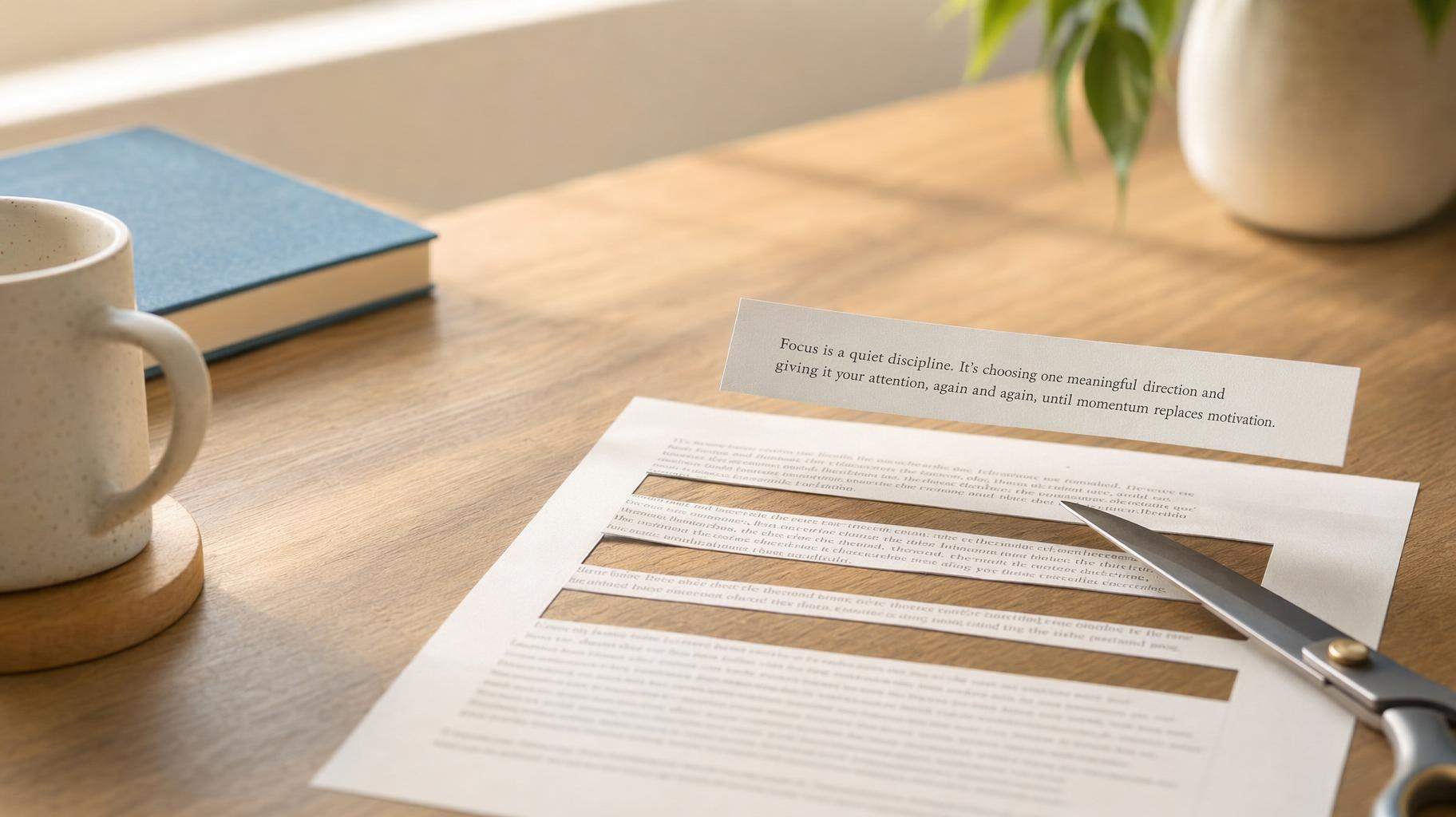
In AI search, you are no longer ranking a page. You are getting a passage cited. Modern answer engines do not retrieve whole pages and read them top to bottom. They split documents into small semantic passages, usually in the range of 200 to 500 tokens, convert each passage into a vector, and select the individual passage that best answers a specific sub-question.A passage gets cited because it directly supports a claim in the generated answer.
Google's AI Overviews are cutting organic clicks hard. Across a 300,000-keyword analysis, the presence of an AI Overview correlated with a 34.5% lower click-through rate for the top-ranking page.The first randomized controlled study of 1,065 desktop Chrome users found AI Overviews cut outbound clicks by 39.8% and raised zero-click searches by 34.5%. On informational queries, some datasets put the CTR decline as high as 61%. Roughly 72% of searches now end without a click.
ChatGPT changed one small thing in how it presents answers, and it moved a lot of traffic. Brand names that used to sit in footnote-style citation chips became clickable links placed inside the answer itself, most of them pointing at brand homepages and carrying a `utm_source=chatgpt.com` tag . The share of ChatGPT responses containing a URL jumped from about 4.5% to 20–24% on the same day, roughly a 5x increase, and referral traffic rose to match.
Shopify can make an eligible product available to AI shopping channels through Shopify Catalog, but availability does not guarantee that ChatGPT, Geminior another agent will display or recommend it. AI shopping visibility is a layered system: a product must first meet catalog requirements, reach the relevant channel, contain enough structured and descriptive data to be understood, match the shopper’s intent, and provide sufficient evidence for the channel to rank it as a useful answer.
AI vendors now run separate crawlers for two different jobs. One set harvests pages to train models. A second set indexes pages so AI search can cite them. These are controlled by different user agents in your robots.txt, which means you can opt out of training while staying fully eligible for AI-search citations. The old advice to "block all AI bots" now backfires: it quietly deletes your brand from the fastest-growing referral channel of 2026.